


Complexity in retail has reached an all-time high. Retailers no longer control single, local inventories. Instead, they interact with computer stores, physical stores, and social commerce across a global supply chain. SKU management sits at the confluence of this retail ecosystem and determines whether a retail business functions well or collapses under the weight of the data.
Cost control starts with effective SKU management. Each product in a warehouse or on a shelf tied up capital. As these items are tracked by a retail business, overstocking happens, causing a drain on cash flow, and understocking happens with no new sales opportunities and lost customer experience loyalty. One of the most challenging elements of SKU management is the consistent and rapid updating of inventory. Today’s consumers expect real-time SKU visibility and accurate pricing at all interaction points. The ability to manage SKU data at a granular level is more than an advantage; it’s survival. In a professional retailing context, this guide will examine the technical and strategic frameworks needed to survive in this environment and to master SKU management.
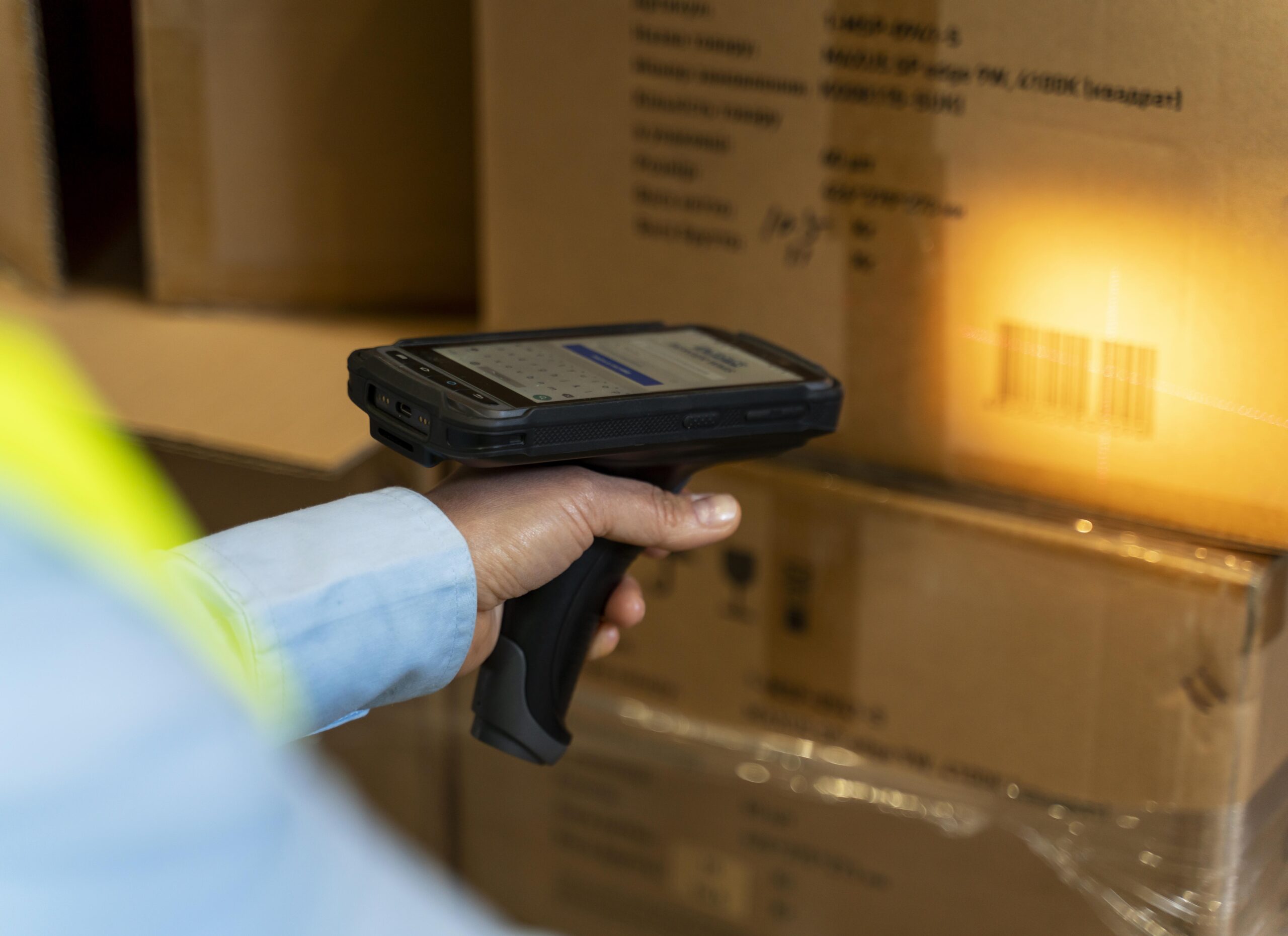
What is the Stock Keeping Unit (SKU)?
A Stock Keeping Unit (SKU) is a unique code (usually alphanumeric codes) for a specific product that a company sells for in-house inventory tracking. A UPC is a universal code used by external organizations, while a SKU is one of the unique identifiers used by companies and retailers, created for their own SKUs. It is the most detail-oriented product information in a retail operation.
All product variants for a specific item require their own different SKUs. Suppose a seller has a cotton shirt model and has it in three different sizes (S, M, and L) and in two different colors (blue and white). That one shirt model needs six unique SKUs. This granularity level helps the seller know which specific combinations sell and which ones do not. Within the inventory systems of a retail company, the SKU is the first logic key for sales data, order management, and stock for the warehouse. Without this level of specificity, a company cannot aggregate their product details correctly, which triggers multi-dimensional failures in their financial information and inventory forecasts.
What is SKU Management: Mapping the Ecosystem
SKU management consists of the development and optimization of the codes and the data pertaining to the product types. Since every process within a business is interrelated, this explanation makes sense within the framework of the overall supply chain management.
Distinguishing SKU from SCM, Inventory, and WMS
While often used interchangeably in casual conversation, these four concepts represent distinct layers of a retail operation. The following table clarifies their relationship within an efficient inventory management strategy:
| Concept | Level | Management Focus | Primary Role |
| Supply Chain Management (SCM) | Macro | Global Coordination | The financial regulator decides how much to buy and when to reorder. |
| Inventarverwaltung | Strategic | Capital & Turnover | The site commander manages movement and storage within four walls. |
| Warehouse Management (WMS) | Execution | Space & Productivity | The site commander managing movement and storage within four walls. |
| SKU Management | Foundation | Identity & Granularity | The data bedrock. It provides the unique identity used by all other layers. |
How SKU Data Drives Retail Operations
Internal retail operations cannot be managed without accurate SKU tracking. Retail buyers receive velocity data that indicates which products deserve higher investments. This is also the same data that indicates poor product performance scheduled for markdowns. These metrics also assist merchandising in determining product placement on a shelf or within the store. Marketing strategies depend on SKU-level tracking for promotion based on target products or product variants.
The absence of administrative and operational silos is the ultimate goal of retail SKU data management. This goal is measured at every point of sale involving a standard SKU number, when a sales transaction occurs, stock levels at the back-end of the ERP system are automatically adjusted, and an inventory reorder points request is generated if the stock crosses a predefined level. Data flow becomes an order of magnitude greater, enabling the business to scale up.
How to Build a Scalable SKU Coding System
Being unorganized from the start leads to a loss of efficiency in a growing business. To develop a SKU management system that can stand the test of time, retailers should incorporate technical naming convention standards, as well as a more structured logic system.
- Standardized Naming Conventions
A professional SKU should be complete using a top down approach, starting with the largest category, working down to more specific details. For example: [Category]-[Brand]-[Model]-[Color]-[Size].
- Logical Structure: A pair of black Nike Air Max shoes in size 10 might be coded as SHO-NK-AM-BLK-10.
- Avoid Randomness: Meaningless sequential numbers should be avoided. As an example, a SKU of 100234 would not allow a warehouse worker to identify the product without assistance from a computer. A SKU that allows for individual product identification allows for quicker identification and troubleshooting.
- Character Constraints and Clarity
A balanced SKU should consist of 8-12 characters. Anything in excess of that will increase the likelihood of data entry errors, and anything too short will lack the detail to be effective.
- Avoid Confusing Characters: Use the letter “O” (which looks like zero) or the letters “I” and “L” (which can look like the number one) sparingly.
- Eliminate Special Characters: Please do not use special characters like @, #, *, or spaces, as they cause issues during software data exports and barcode scanning. Use hyphens instead of separating words.
Advanced SKU Management Strategies for High Efficiency
Once a system for coding has been implemented, the focus can then shift to optimization. Highly efficient SKU Management includes the active curation of the product portfolio to drive maximum profit margin per square foot.
SKU Rationalization to Eliminate Low-Performing Inventory
SKU rationalization refers to the analytical process of reviewing and rationalizing ranges of inventory to determine whether a specific variation of a product should continue to be stocked. Large retailers, in particular, suffer from what is termed “SKU proliferation”, where the number of SKUs expands to such an overwhelming degree that it becomes unmanageable and profitability is diluted.
Using data, retailers are able to determine what are referred to as “Zombie SKUs”; these are items that are taking up expensive real estate in a store and that they have a negative contribution to gross profit due to poor sales velocity. Rationalization of these items involves the permanent removal or liquidation of such inventory, in order to increase space availability for higher-margin, faster-moving items. This process also protects the company’s balance sheet by ensuring that every SKU on the shelf is a profitable one.
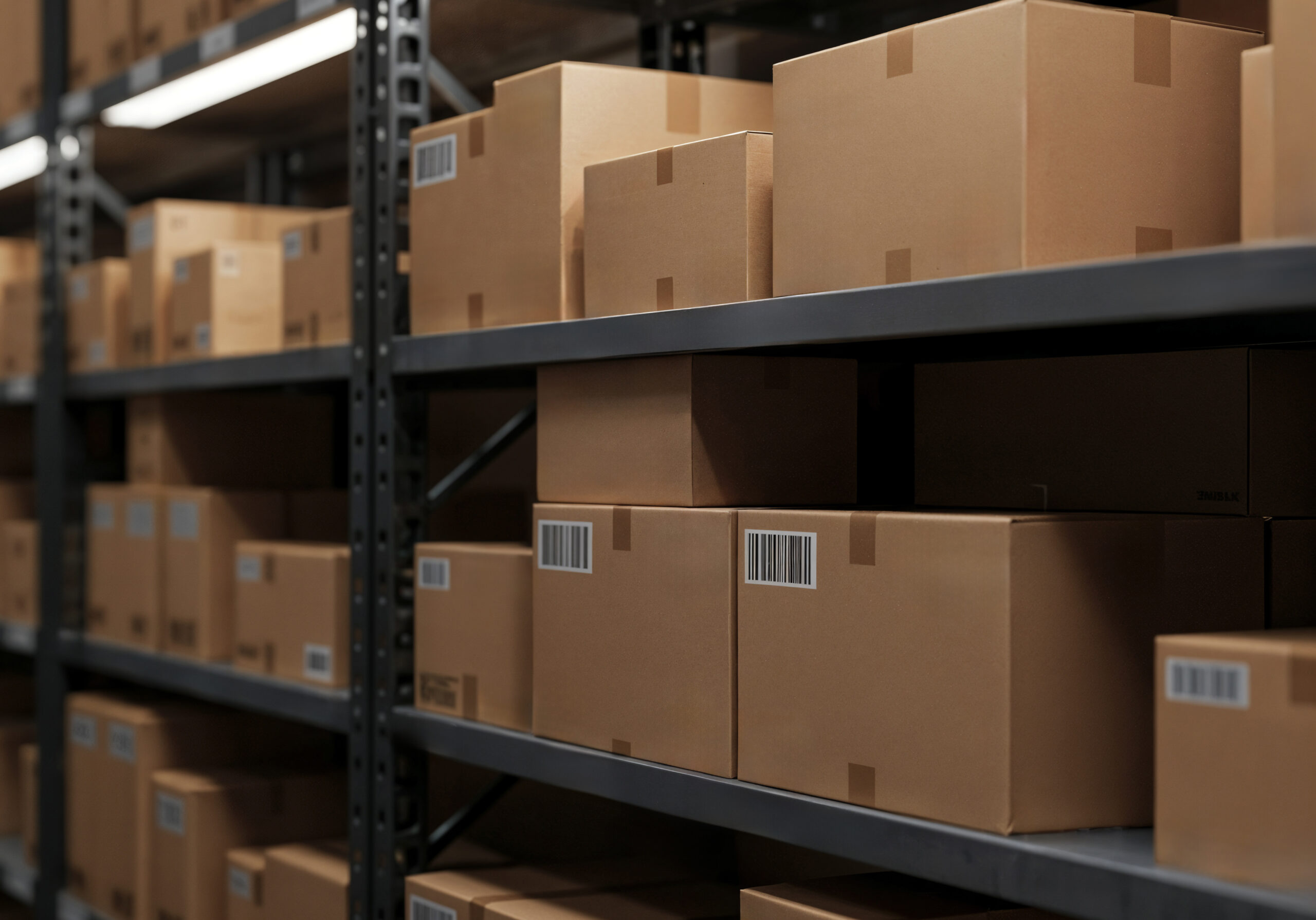
ABC Analysis for Strategic Inventory Prioritization
Not all SKUs are equal in value or sales frequency. ABC Analysis categorizes inventory based on its importance to business needs, typically following the 80/20 rule:
- Category A: Items that account for about 80% of revenue represent 20% of the stock. Keeping these SKUs highly managed and at the top of the restocking priority list is vital. They should be counted often.
- Category B: The 30% of stock that, on average, brings in 15% of revenue should be reviewed and requires moderate inventory control.
- Category C: This stock class is 50% of the total inventory but generates only 5% of revenue. They should be ordered, when necessary, with less effort and at a lower frequency.
Integrating SKU Systems with ERP, PIM, and POS
For big businesses, every aspect of the SKU system has to be integrated with the other elements of the system. Otherwise, the business cannot work and function as a unit and will lose a “single source of truth” electronic system in the business.
- ERP (Unternehmensressourcenplanung): This system looks after the financial and purchasing information connected to a SKU.
- PIM (Product Information Management): This system holds all specific information that includes elements, documents, and images. These provide and describe each SKU for marketing. They are integrated to be used with all types of media – print and digital.
- POS (Point of Sale): This system updates in real-time when a customer purchases a product and thereby reduces the stock of a SKU.
Integration guarantees that changes in the fulfillment process and order fulfillment are reflected across all sales channels.
Synchronizing Digital Data with ESL for Physical Accuracy
Electronic Shelf Labels (ESL) are the terminal for the SKU management system and ensure the digital records are in line with reality on the sales floor. ESLs are integrated with the backend and can auto-update prices, promotional information, and stock availability and changes in real time. This integration prevents ‘data drift’, a situation where the system goes out of sync with what is on the shelf, causing costly mistakes at the register, lost sales, and frustrated customers.
ESLs also improve warehouse operations. In stockrooms, these digital devices offer team members real-time, dynamic information regarding the location of a SKU and the quantity of stock on hand, facilitating more efficient picking and greater accuracy of cycle counts. By swapping out paper tags for automated displays, retailers ensure that a SKU’s physical status is in lockstep with its digital counterpart across the entire supply chain, from receiving to the register.

Automating SKU Management through Zhsunyco® ESL Solutions
Zhsunyco® provides a comprehensive one-stop ESL and IoT solution that accelerates SKU management automation. With over 12 years of R&D experience, Zhsunyco® enables retailers to synchronize digital SKU data with physical shelves using open base stations with MQTT for seamless POS and IoT integration. Their hardware supports diverse protocols, including 2.4GHz, NFC, and BLE, ensuring stable data transmission across warehouses and stores. By paying once-for-lifetime software—available on-premise for 100% security—retailers can implement real-time pricing and inventory updates. This system eliminates manual errors, turning physical stores into agile digital assets and driving data-driven, intelligent operations.
Measuring Success: Key SKU Management Metrics
To evaluate the effectiveness of a SKU management strategy, retailers must track inventory using specific Key Performance Indicators (KPIs). The following table summarizes the metrics that matter most:
| Metric | Definition | Strategisches Ziel |
| SKU Velocity | Sales volume of a SKU over a specific period. | Identify high-demand items for Category A focus. |
| Inventory Turnover | Frequency of selling and replacing average inventory. | Increase turnover to improve cash flow and efficiency. |
| Stockout Rate | Percentage of time a SKU is unavailable for purchase. | Keep Category A stockouts as close to 0% as possible. |
| Carrying Cost | Total cost of holding a SKU (storage, labor, insurance). | Reduce costs by eliminating slow-moving “Zombie” SKUs. |
| Shrinkage Rate | Loss of stock due to theft, damage, or record errors. | Ensure physical stock matches digital SKU records. |
The Future of SKU Control: Efficiency Through Automation
The direction of automation of retail is the goal of the process of retail automation as a whole. Across the board, manual self management of SKU has always been slow and subject to an undue burden of failure. The future of SKU management lies in the concept of a “living shelf”. The living shelf is an environment where self management of the SKU can be instantaneously updated by an intelligent system that forecasts demand and displays the data using Electronic Shelf Labels instantaneously.
The predictive procedure will replace the reactive task of SKU management, and Systemizations will be able to sell and predict the items a company will sell, adjust the price automation margins, and inform warehouse robots of replenishment without the assistance of working humans. Understanding the fundamentals of SKU architecture today is the first step toward automation in the retail economy of the future.
Häufig gestellte Fragen
In inventory management, a Stock Keeping Unit is a unique internal alphanumeric code used to track inventory for a specific product variant. It is the most detailed level of tracking a retailer can have. A SKU captures particular details such as size, style, color, and material, allowing a business to match and distinguish among items.
More than just a name, the SKU acts as the central data key that connects all sales and purchasing to warehouse logistics. By tracking inventory at the level of stunning detail within an SKU, retailers are in a vantage point to make critical business decisions such as restful product performance, accurate margins for specific variants, and smarter decisions for reordering or discontinuing products.
For internal tracking, the SKU is the superior tool. A UPC (Universal Product Code) is a standardized 12-digit barcode used globally to identify a product across all retailers. Because UPCs are external and fixed, they do not provide the flexibility required for internal warehouse or store-level management. In contrast, SKUs are created by the retailer for the retailer. They can be structured to reflect internal categories, shelf locations, or seasonal identifiers. While a UPC tells the world what the product is, a SKU tells your specific business how that product fits into your unique operational logic. Most professional retailers use UPCs for external checkout and SKUs for all internal logistics and analysis.
In order to implement SKU management in your store, you have to take a three-step systematic approach. Firstly, identify your hierarchy and coding logic. Determine the key attributes you need to consider (e.g., brand, size, color) and develop a standard manual to avoid inconsistencies in the future. Secondly, analyze your existing stock and allocate these new identifiers to each distinct product variant. Be sure to transfer the information to a centralized database, such as an ERP or POS system. Finally, close the digital and physical divide by using a labeling system, preferably Electronic Shelf Labels (ESL), that updates your SKU information and shelf displays in real time. So as your office data continues to evolve, your store will make updates to keep data integrity at 100%, alleviating the need for manual updates.

 English
  Russian
  Spanish
  German
  Arabic
  French
  Bulgarian
  Polish
  Romanian
  Turkish