


Руководство по дисплеям IoT: E-ink, LCD и ловушки TCO (2026)
Анатомия настоящего IoT-дисплея
Хватит смотреть на iPad или потребительский планшет на вашем столе. Когда современные предприятия планируют развертывание тысяч цифровых конечных точек на обширных складах, в торговых проходах или интеллектуальных коммерческих зданиях, экраны потребительского класса быстро превращаются в огромные энергетические черные дыры и кошмары технического обслуживания. Фундаментальная архитектура потребительского планшета рассчитана на постоянное взаимодействие с пользователем, непрерывный опрос Wi-Fi и ежедневные циклы зарядки. В отличие от этого, настоящий IoT Дисплей - это не просто пассивное периферийное устройство с выходом; он разработан с нуля, чтобы служить информационным шлюзом с низким энергопотреблением. Эта смена парадигмы требует от нас принятия концепции Видимость краевых узловДисплей выступает в качестве автономного терминала, способного преобразовывать необработанные данные в полезные для человека сведения, не привязываясь к электросети.
Чтобы понять необходимость этого специализированного оборудования, представьте себе "умную" табличку для переговорных комнат или индикатор занятости в режиме реального времени, установленный на несущей стеклянной стене или архитектурно отделанной бетонной колонне. Сверлить отверстия для прокладки силовых кабелей 110В/220В или стандартных линий Ethernet не просто затратно, во многих сценариях модернизации это конструктивно невозможно. Это физическое ограничение на развертывание диктует фундаментальную ДНК IoT-экрана. Настоящий IoT-экран должен обладать тремя неотъемлемыми генетическими характеристиками:
- Экстремальная энергоэффективность: Оборудование должно обладать способностью годами, а не днями или неделями работать от одного монетного элемента (например, CR2450) или основного литиевого аккумулятора. Это требует микроамперных токов в режиме ожидания и технологий отображения, которые не требуют постоянного обновления для удержания изображения.
- Бесшовная связь между машинами и механизмами (M2M): Отключенный экран бесполезен. Дисплеи IoT требуют встроенной интеграции для передачи данных с низким энергопотреблением и большим радиусом действия. Они должны легко интегрироваться с сетевыми топологиями, такими как LoRaWAN, NB-IoT или специализированные BLE-сети, интеллектуально просыпаясь только при обнаружении полезной нагрузки, чтобы сохранить ресурс батареи.
- Прочность и устойчивость к внешним воздействиям промышленного класса: Эти устройства часто устанавливаются в условиях, лишенных климатического контроля. Они должны быть чрезвычайно устойчивы к резким перепадам температур, высокой влажности, длительному воздействию ультрафиолетовых лучей и сильным электромагнитным помехам (ЭМИ) от расположенного рядом промышленного оборудования, и все это в условиях стратегии изоляции, не требующей технического обслуживания.
Дисплейные технологии на арене IoT
Чтобы сориентироваться в сильно фрагментированном аппаратном ландшафте 2026 года, корпоративные покупатели и архитекторы оборудования должны объективно оценить физические механизмы, лежащие в основе современных дисплеев. Не существует какого-то одного "лучшего" дисплея; есть только правильная технология, идеально подходящая для своей области. Давайте проведем тщательный анализ доминирующих технологий дисплеев в экосистеме IoT.
Электронные бумажные дисплеи (E-Paper / E-ink)
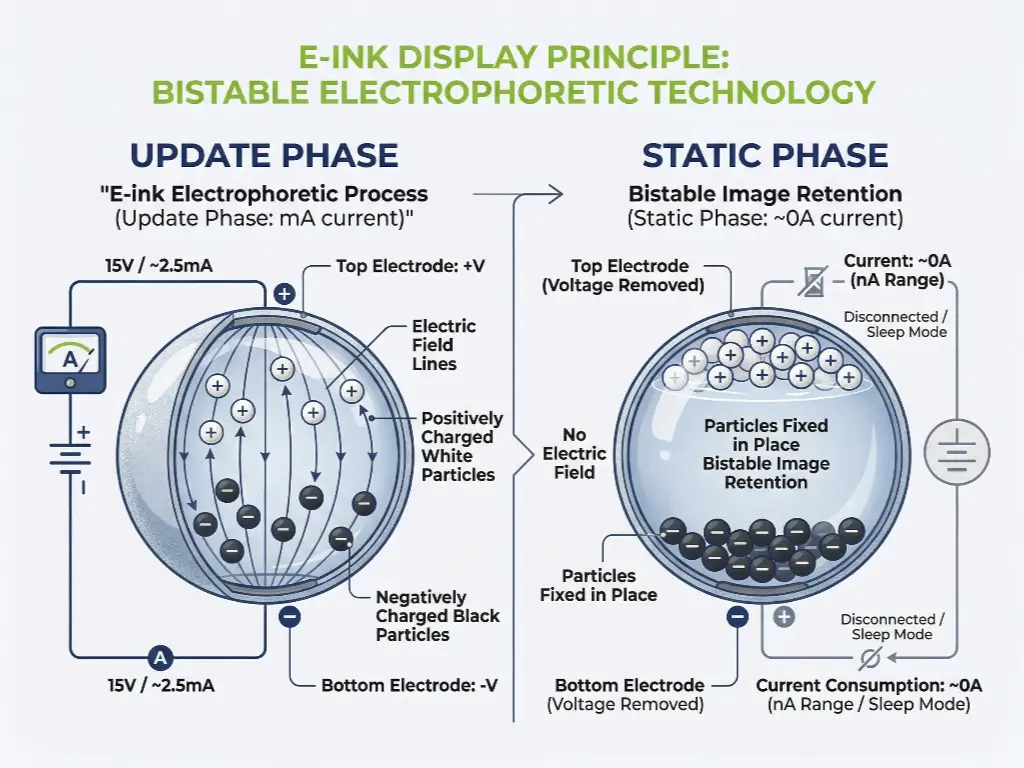
Электронная бумагаШироко известная как E-ink, является бесспорным королем статических приложений с ультранизким энергопотреблением. Его доминирующее положение обусловлено Бистабильная технология. В отличие от традиционных жидкокристаллических дисплеев, которым для поддержания изображения на экране требуется непрерывная подсветка и постоянный цикл обновления с частотой 60 Гц, E-paper основывается на электрофорезе. Дисплей содержит миллионы микрокапсул, заполненных прозрачной жидкостью, содержащей положительно заряженные белые частицы и отрицательно заряженные черные частицы. Применяя локализованное электрическое поле, схема физически перемещает эти пигментные частицы к поверхности экрана. После перемещения они остаются на месте - бесконечно долго.
Очень важно понимать точную физику этого процесса, чтобы избежать просчетов при проектировании. В течение нескольких секунд фазы обновления ИС драйвера требует высокого повышающего напряжения (обычно около 15 В) для инвертирования электрофоретических частиц, потребляя пиковые токи в несколько миллиампер (мА). Однако после формирования изображения дисплей переходит в состояние удержания изображения с нулевым энергопотреблением. На оставшиеся 23,9 часа аппаратное обеспечение может погрузиться в спящий режим на уровне наноампер (нА). Это делает E-paper абсолютным золотым стандартом для электронных полочных этикеток (ESL), логистических меток и умных офисных бейджей. Тем не менее, разработчики аппаратного обеспечения должны разработать меры по смягчению присущих ей физических ограничений: "призрачность" (малозаметные остатки предыдущих изображений, требующие периодических черно-белых вспышек на весь экран для очистки) и серьезное снижение производительности в условиях отрицательных температур, когда повышенная вязкость жидкости в микрокапсулах может увеличить время обновления с 2 до более чем 5 секунд.
OLED и Micro-LED (самоизлучающие технологии)
Когда высокая контрастность, глубокий черный цвет и яркая цветовая гамма не являются обязательными условиями, на сцену выходят самоизлучающие технологии. OLED (Organic Light-Emitting Diode) обеспечивает бесконечную контрастность и гибкость формфакторов за счет подсветки отдельных органических пикселей напрямую, без использования громоздкой энергоемкой подсветки. Несмотря на то, что OLED визуально ошеломляет и идеально подходит для потребительских носимых устройств премиум-класса, она страдает от фатального физического недостатка при использовании в промышленных IoT-панелях непрерывного действия: обжиг. В сценарии круглосуточного статического отображения пользовательского интерфейса - например, монитора состояния заводского оборудования, на котором круглые сутки отображаются одни и те же датчики и сетки, - органические соединения разрушаются неравномерно, оставляя на экране постоянные призрачные отпечатки.
Micro-LED представляет собой окончательное будущее для премиальных, высокояркостных систем, устанавливаемых внутри и вне помещений. Заменяя разлагающиеся органические соединения OLED микроскопическими неорганическими светодиодами из нитрида галлия (GaN), Micro-LED достигает потрясающих уровней яркости (часто превышающих 5 000 нит) и абсолютной невосприимчивости к выгоранию. Несмотря на то, что в настоящее время производственные затраты, связанные с массовым выходом, ограничены, Micro-LED быстро становится технологией выбора для высококлассных концентраторов "умного дома", премиальных автомобильных IoT-интерфейсов и критически важных медицинских дисплеев, где требуется как долговечность, так и максимальная визуальная производительность.
ЖК-дисплеи с памятью (средний уровень энергопотребления с высокой степенью обновления)
Что делать, если для IoT требуется частота обновления динамических данных на уровне видео, но бюджет питания позволяет использовать только батарею с монетой? E-ink слишком медленный, а традиционные TFT ЖК-дисплеи разряжают батарею за несколько часов. Входите в высокоспециализированную сферу ЖК-дисплеев с памятью. Эта технология позволяет преодолеть огромный разрыв между статичной электронной бумагой и энергоемкими TFT-матрицами.
ЖК-дисплеи с памятью достигают этой "лучшей из двух миров" возможности благодаря интеграции 1-битной схемы статической оперативной памяти (SRAM) непосредственно в каждый пиксель на стеклянной подложке.

В стандартном ЖК-дисплее главный процессор должен постоянно отправлять данные об изображении на экран 60 раз в секунду, чтобы предотвратить его выцветание. В ЖК-дисплее с памятью процессор посылает данные об изображении один раз, а SRAM внутри каждого пикселя сохраняет состояние локально. Для поддержания поляризации жидкого кристалла дисплею требуется лишь мизерный микроамперный ток (мкА). Поскольку он обладает высокой отражающей способностью и не требует подсветки, он остается отлично читаемым при внешнем освещении. При этом, в отличие от E-ink, жидкие кристаллы могут менять свое состояние за миллисекунды, что позволяет обновлять информацию с высокой частотой (до 60 Гц). Это делает ЖК-дисплеи с памятью бесспорными королями носимых медицинских мониторов, непрерывных биометрических приборных панелей и спортивных устройств слежения, где требуется непрерывное отображение формы волны в реальном времени без привязки к зарядному устройству.
TFT и сегментированные ЖК-дисплеи (традиционные рабочие лошадки)
Для высокочастотных сложных терминалов с человеко-машинным интерфейсом (HMI), где требуются насыщенные полноцветные графические пользовательские интерфейсы (GUI), преобладающим стандартом остаются ЖК-дисплеи на тонкопленочных транзисторах (TFT). Однако установка стандартного TFT на открытом воздухе - это залог неудачи из-за вымывания солнечного света. Чтобы решить эту проблему, в промышленных IoT используются Трансфлективные ЖК-дисплеи. Эти разработанные панели оснащены специальным полуотражающим задним поляризатором. В темных условиях подсветка просвечивает (пропускающая), а при прямом солнечном свете окружающий свет отражается обратно (отражающая), резко повышая контрастность, не заставляя подсветку пересиливать солнечный свет, тем самым экономя энергию.
На противоположном конце спектра находится скромный сегментированный ЖК-дисплей. При всей своей визуальной примитивности (напоминающей классические дисплеи цифровых часов или простые цифры калькулятора) сегментированные ЖК-дисплеи представляют собой абсолютную вершину эффективности BOM (Bill of Materials). Поскольку они мультиплексируют заранее определенные визуальные сегменты, а не управляют полной сеткой пикселей активной матрицы, они требуют практически нулевых накладных расходов на обработку и невероятно дешевых ИС драйверов. Для миллионов низкоуровневых, массово развертываемых узлов IoT, таких как интеллектуальные счетчики воды, газовые счетчики и базовые индикаторы температуры, сегментированные ЖК-дисплеи остаются действующим чемпионом, обеспечивая десятилетний срок службы на одной батарее при стоимости единицы продукции в копейки.
| Технология | Состояние энергопотребления | Типичная частота обновления | Читаемость при солнечном свете | Идеальный вариант использования IoT |
|---|---|---|---|---|
| Электронная бумага (E-ink) | Пиковый ток мА во время обновления; нулевое статическое удержание | Очень медленно (от 1 до 5 секунд) | Превосходно (отражает бумагу) | ESL для ритейла, логистические метки, электронные бейджи, умные таблички для помещений |
| Память ЖК-дисплея | Ультранизкий уровень (мкА) удержания пикселей SRAM | Высокий (с частотой до 60 Гц) | Превосходно (высокий уровень отражения) | Носимые устройства, непрерывные медицинские мониторы, смарт-часы |
| OLED / Micro-LED | Высокая (Постоянная мощность, необходимая для самоизлучения) | Сверхвысокие (субмиллисекундные) | Плохо (OLED) / Отлично (Micro-LED) | Внутренние программируемые терминалы премиум-класса, интеллектуальные домашние концентраторы, медицинские изображения |
| Трансфлективный TFT | От умеренного до высокого (зависит от использования подсветки) | Высокий (стандарт 60 Гц) | От хорошего до отличного (отражение окружающей среды) | Наружные киоски, станции зарядки электромобилей, прочные КПК |
| Сегментированный ЖК-дисплей | Очень низкий (простое мультиплексное управление) | Умеренный | Хорошо (в зависимости от поляризатора) | Коммунальные счетчики, основные индикаторы состояния, термостаты |
Важнейшие факторы при выборе технологии отображения IoT
Переход от чистой технологической теории к практическому, наземному внедрению требует строгой системы оценки. Покупатели должны прекратить слепую погоню за "новейшими технологиями" и вместо этого сопоставить свои бизнес-требования, аппаратные ограничения и экологические реалии, чтобы избежать катастрофических ошибок при закупках.
Требования к конкретным приложениям
Никогда не завершайте выбор оборудования, не проверив визуальное и физическое окружение места развертывания. Концепция Коэффициент контрастности окружающего освещения является определяющей метрикой. При прямом солнечном свете окружающая освещенность может легко превышать 100 000 люкс. Если архитектор установит стандартный TFT-дисплей или OLED-дисплей уровня смартфона для наружного датчика умного сельского хозяйства, дисплей будет полностью вымыт. Попытка компенсировать это, разогнав OLED до максимальной яркости, не только разрядит батарею за несколько часов, но и ускорит тепловую деградацию и выгорание терминала. В таких условиях высокой освещенности отражающий E-ink или Memory LCD принципиально лучше, поскольку он использует солнечные фотоны для повышения собственной контрастности, обеспечивая идеальную читаемость при абсолютно нулевых затратах энергии на подсветку.
Аппаратные и технические ограничения
Самая опасная ловушка при проектировании оборудования IoT - оценка стоимости дисплейного модуля в отдельности. Вы должны рассчитать системные затраты на управление этим дисплеем. Многие неопытные команды поддаются на соблазн дешевого полноцветного TFT-дисплея с высоким разрешением, полагая, что он повысит воспринимаемую ценность их продукта. Реальность же является жестоким уроком в области разработки встраиваемых систем.
Для управления полноцветным экраном с высоким разрешением (например, через интерфейс RGB или MIPI DSI) стандартного маломощного микроконтроллера (MCU) $2 безнадежно недостаточно. Для дисплея 320×240 с 16-битным цветом требуется примерно 150 КБ оперативной памяти только для хранения одного кадрового буфера. Большинство стандартных сверхмаломощных чипов Cortex-M0 или M3 имеют только от 32 КБ до 64 КБ внутренней памяти SRAM. Следовательно, инженерная команда вынуждена переходить на кроссоверные MCU более высокого уровня и, что очень важно, подключать дорогостоящие внешние чипы PSRAM и SPI Flash для хранения тяжелых пользовательских активов и графических библиотек. Этот архитектурный форс-марш не только увеличивает общую стоимость BOM (Bill of Materials) на $2 - $4 за единицу, но и наносит смертельный удар по бюджету на электроэнергию. Необходимость поддерживать питание внешней памяти и MCU в активном состоянии полностью уничтожает способность устройства входить в экстремально глубокий сон. Батарея, рассчитанная по математическим расчетам на 2 года работы, разряжается всего за 3 месяца, потому что статический нижний ток сна полностью потерял контроль.
Экологические ограничения и прочность
Потребительское стекло трескается под давлением; промышленное стекло выдерживает экстремальные нагрузки. Настоящее развертывание B2B IoT требует строгого соблюдения международных стандартов защиты. Согласно IEC 60529 (стандарт, определяющий степень защиты IP), дисплей, установленный в заводской зоне мойки или на открытом логистическом складе, должен иметь степень защиты не ниже IP65 (устойчивость к водяной струе) или IP67 (устойчивость к погружению). Но попадание воды - это только начало экологического штурма.
Рассмотрим дисплей, установленный на приборной панели логистического грузовика, быстро перемещающегося из морозильной камеры с температурой -20°C во влажный погрузочный док с температурой +30°C. Такие резкие перепады температуры неизбежно вызывают внутреннюю конденсацию. Если в экране используется стандартная сенсорная панель с воздушным зазором, водяной пар будет конденсироваться между стеклом и ЖК-элементом, что приведет к полной неразборчивости, фантомным нажатиям и в конечном итоге к короткому замыканию. Чтобы противостоять этому, промышленные дисплеи должны Оптическое скрепление-процесс, при котором специализированный диэлектрический клей с подобранным индексом (например, LOCA или сухой пленочный OCA) полностью заполняет пустоту между покровным стеклом и панелью дисплея. Это устраняет воздушный зазор, полностью предотвращая внутреннее запотевание, значительно уменьшая отражение внутреннего света и значительно повышая ударопрочность конструкции.
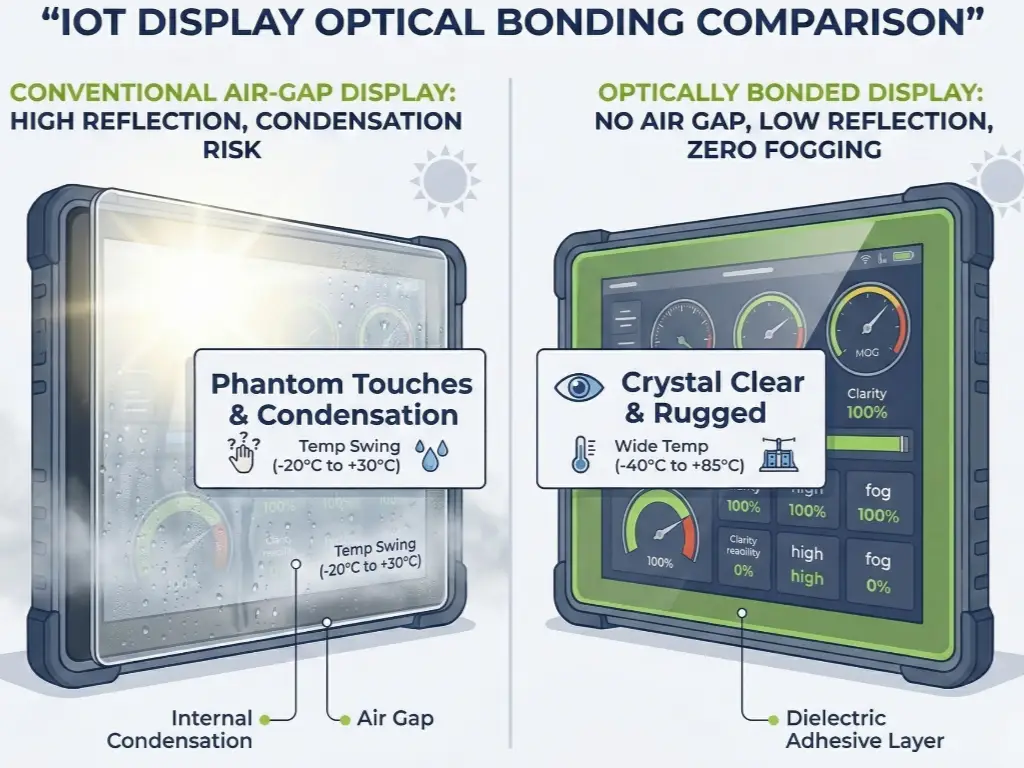
Кроме того, дисплейный модуль должен быть рассчитан на широкий диапазон рабочих температур (от -20°C до +70°C) и иметь надежную защиту от электромагнитных помех (EMI), чтобы мощный электрический шум, создаваемый заводскими двигателями, не повредил чувствительные линии передачи данных I2C или SPI.
Невидимый спасательный круг протоколов подключения
Прочный экран с ультранизким энергопотреблением совершенно бесполезен, если на нем отображаются устаревшие данные. Протокол подключения, выбранный для передачи данных на IoT-дисплей, так же важен, как и само стекло. Решение строго раздваивается между бесконтактными сетями с высокой пропускной способностью и широкомасштабными сетями с низким энергопотреблением.
Стандарт Wi-Fi и Bluetooth Low Energy (BLE) отлично подходят для внутренних сценариев, требующих высокой пропускной способности и частоты обновлений, таких как интерактивные таблички в больничных палатах или умные домашние термостаты. Однако попытка масштабировать Wi-Fi на открытом химическом заводе площадью 500 000 квадратных футов или огромном розничном складе - это инфраструктурный кошмар. Развертывание, подключение и обслуживание десятков промышленных точек доступа Wi-Fi (AP) для устранения "мертвых зон" обойдется дороже, чем сами дисплеи.
Именно здесь маломощные глобальные сети (LPWAN), в частности LoRaWAN и NB-IoT, становятся абсолютными спасителями масштабных развертываний IoT. Один шлюз LoRaWAN может проникать сквозь плотные бетонные стены и охватывать радиус в несколько километров, устраняя необходимость в сложной сетевой проводке. Однако покупателям следует помнить о серьезных ограничения по полезной нагрузке. MAC-уровень LoRaWAN сильно ограничивает объем данных, передаваемых в одном пакете (часто это десятки байт в зависимости от коэффициента разброса). Поэтому вы не можете просто передать по воздуху на LoRa-дисплей тяжелые, полностью отрендеренные изображения в формате JPEG.
Современные промышленные решения не полагаются только на локально предварительно отрендеренные, негибкие шаблоны пользовательского интерфейса для решения этой проблемы. Вместо этого в передовые архитектуры дисплеев ESL и IoT встроены алгоритмы дифференциального обновления на аппаратном уровне. Передавая только 1-битные черно-белые матричные данные, специально предназначенные для измененных областей экрана (дельта-обновления), архитектура математически реконструирует локальное изображение. Это позволяет глобально обновлять динамические сложные данные, такие как генерируемые на лету QR-коды или специальные символы на разных языках, в рамках строго ограниченной полезной нагрузки LPWAN, экономя огромное количество эфирного времени и заряда батареи.
Ловушка общей стоимости владения (TCO) при массовом развертывании
Самый опасный подводный камень для специалистов по закупкам предприятий - это сосредоточенность на первоначальных капитальных затратах (CapEx) на аппаратный модуль при полном отсутствии внимания к операционным расходам (OpEx), которые будут иссушать бюджет в течение следующего десятилетия. Согласно Всесторонний анализ Gartner В исследовании "Общая стоимость владения промышленным IoT" говорится, что первоначальное приобретение оборудования часто составляет лишь малую часть общей стоимости жизненного цикла развертывания корпоративного IoT. Безмолвная переменная, убивающая проект, - это Стоимость прокатки грузовика-Огромные материально-технические затраты, связанные с отправкой специалистов для проведения технического обслуживания на месте.
Рассмотрим жестокую математику развертывания 1000 беспроводных цифровых дисплеев в национальной сети розничные магазины или удаленных промышленных объектах. Если группа закупок выбирает "более дешевый" TFT-дисплей Wi-Fi потребительского класса, который разряжает батарею каждые 8 месяцев, компания должна организовать массовую операцию по замене батареи. Отправка техника, состоящего в профсоюзе или работающего по контракту, на удаленный объект может стоить от $100 до $150 в час, если учесть время в пути, износ автомобиля, стоимость рабочей силы и административные накладные расходы. Даже если на каждый объект уходит всего час, замена батарей на 1 000 узлов потребует более $100 000 трудозатрат только в год. Ко второму году так называемое "дешевое" оборудование приводит к полному финансовому краху проекта. И наоборот, инвестиции в премиальные дисплеи E-ink с высокооптимизированными протоколами LoRaWAN или собственными протоколами сверхнизкого энергопотребления 2,4 ГГц гарантируют срок службы батарей от 5 до 10 лет, фактически сводя текущие трудозатраты на обслуживание к абсолютному нулю.
| Вектор затрат (гипотетическая 1 000 единиц, трехлетний цикл) | Потребительский TFT ЖК-дисплей (Wi-Fi, High Drain) | Промышленные E-ink (протокол LPWAN/ESL, сверхнизкое энергопотребление) |
|---|---|---|
| Начальное оборудование и экранные модули | $25,000 | $35,000 (Первоначальные капитальные затраты на премию) |
| Прокладка кабелей / инфраструктура сетевых точек доступа | $18 000 (Требуется плотное размещение точек доступа Wi-Fi) | $1,500 (Требуется 1-2 шлюза дальнего действия) |
| Аккумуляторная батарея и трудозатраты на 3 года (затраты на перекатку грузовика) | $120,000 (Заменено 4 раза за 3 года @ $30/шт) | $0 (гарантированный срок службы батареи 5+ лет) |
| Общий прогноз ТСО на 3 года | $163,000 | $36,500 |
Матрица принятия решений для выбора экрана IoT
Чтобы синтезировать этот сложный инженерный и финансовый ландшафт, архитекторы оборудования и ИТ-директора должны пропустить свои перспективные IoT-проекты через строгий, бескомпромиссный древовидный фильтр. Придерживайтесь следующей матрицы, чтобы гарантировать безупречное соответствие ваших закупок физической реальности:
- 1. Доступность питания: Подключено ли место развертывания к стабильной электросети?
- Да: Используйте TFT LCD или OLED с высоким разрешением для максимальной визуальной достоверности и вовлеченности.
- Нет (полагается исключительно на аккумулятор или сбор энергии): Сразу же перейдите к шагу 2.
- 2. Частота обновления: Требуется ли для пользовательского интерфейса воспроизведение видео, плавная анимация или высокочастотные формы сигналов в реальном времени (например, мониторы ЭКГ)?
- Да: Выберите ЖК-дисплей с памятью, чтобы сбалансировать высокую частоту обновления и микроамперную мощность в режиме ожидания.
- Нет (Информация статична, обновляется время от времени в течение дня/часа): Перейдите к шагу 3.
- 3. Окружающая среда: Будет ли экран подвергаться воздействию прямых солнечных лучей, сильных перепадов температур или зон мойки?
- Да: Обязательно используйте ЖК-дисплеи с оптическим покрытием, широкотемпературной электронной бумагой или трансфлективным покрытием в герметичных корпусах IP67.
- Нет (в стандартных закрытых помещениях с контролируемым климатом, таких как торговые ряды или чистые склады): Стандартные чернила E-ink (для электронных полочных этикеток) или сегментированные ЖК-дисплеи, в зависимости от вашего визуального бюджета и требований к сложности данных.
Наконец, независимо от выбранного оборудования, убедитесь, что архитектура программного обеспечения запрограммирована на Благодатная деградация. В случае отключения сети или критического состояния низкого напряжения батареи настоящий промышленный IoT-экран никогда не должен выходить на пустой черный экран. Он должен быть спроектирован таким образом, чтобы заморозить последнюю известную достоверную полезную нагрузку данных на экране, нанеся на него водяную метку "Последнее обновление: X часов назад", гарантируя, что операции на уровне земли и цепочки поставок не остановятся из-за временной "мертвой зоны" беспроводной связи.
Даже идеальное дерево принятия решений не может охватить все экстремальные промышленные условия или сложные задачи интеграции ERP. Не допустите, чтобы ваш миллионный проект провалился на самом первом этапе выбора оборудования. На протяжении 12 лет, Жсуныко глубоко культивировал розничная торговля IoT и коммерческих дисплеев, предоставляя промышленные ESL и заказные решения для дисплеев со сверхнизким уровнем брака (0,0018%) и сроком службы до 10 лет. Пришлите нам свои требования сегодня, чтобы заказать бесплатную 15-минутную техническую консультацию с нашими экспертами-архитекторами. Благодаря надежной цепочке поставок и "умной" фабрике площадью 20 000 м² вы сможете получить глубоко адаптированные прототипы всего за 3-5 дней и ускорить развертывание вашего глобального проекта!
Свяжитесь с нами сейчас
 English
  Russian
  Spanish
  German
  Arabic
  French
  Bulgarian
  Polish
  Romanian
  Turkish
  Portuguese