


What Are IoT Retail Applications?
Retail Internet of Things (IoT) is a strategic implementation of interconnected sensors, edge computing devices, and digital interfaces in a physical retail setting. The essence of these technologies is to digitalize physical resources and activities. IoT will turn a passive brick-and-mortar store into a dynamic, data-producing node in a larger business network by recording real-time information on shelves, refrigeration units, inventory pallets, and customer movements. This digital transformation enables enterprise systems to view, examine, and streamline the physical world as accurately as a digital e-commerce platform, representing the future of retail.
For a broader understanding of how this IoT technology works, check out our comprehensive guide on Smart Retail IoT. In this post, we will break down the specific IoT retail applications along the retail value chain to highlight how they benefit the retail industry.
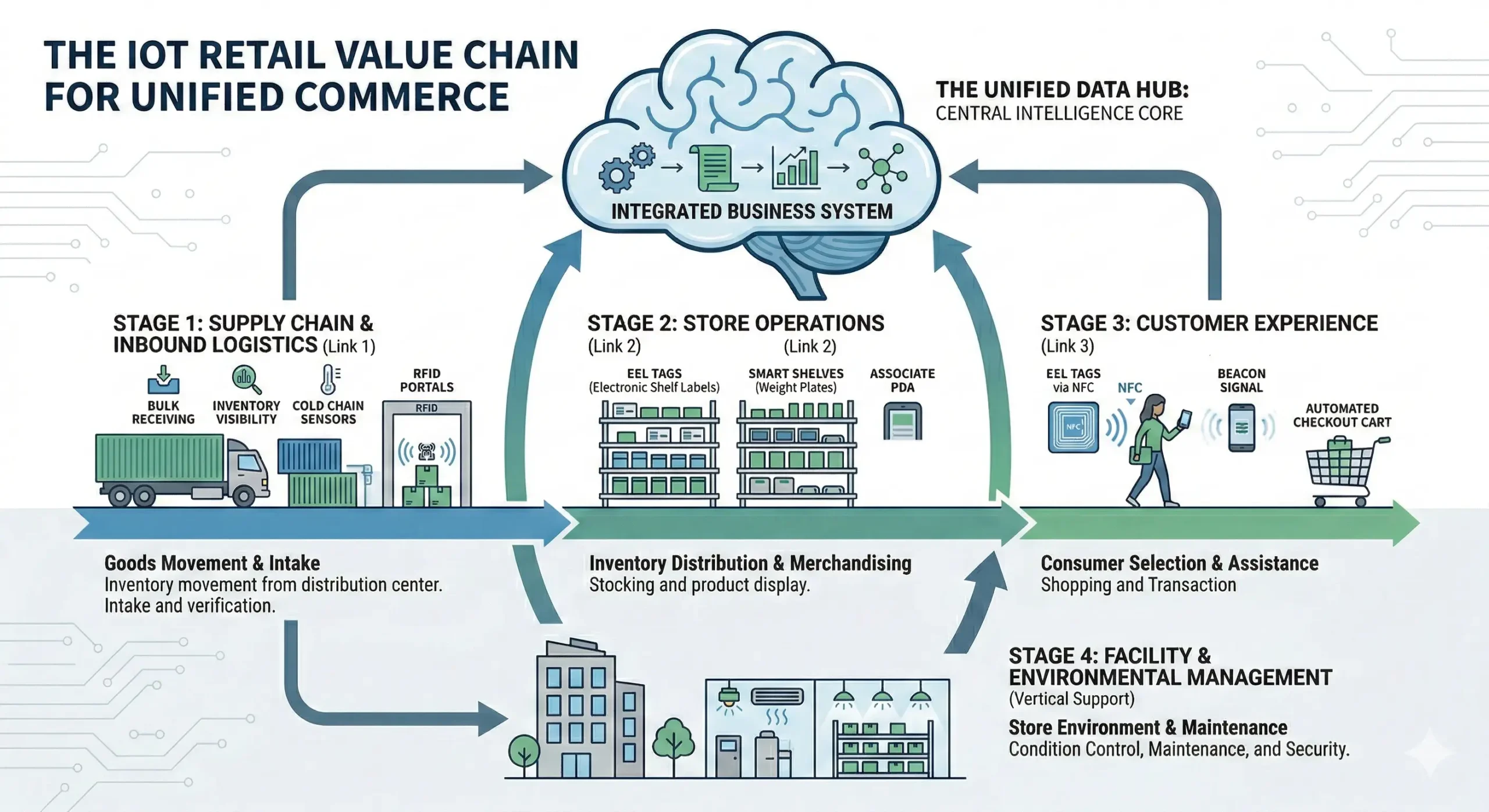
In order to comprehend the IoT architecture of a modern retail deployment, one has to consider the operation as a flow of data. The implementation logic is based on the physical path of a product and the infrastructure that is in place to support it. This value chain comprises five different stages:
Supply Chain and Inbound Logistics
A cohesive commerce ecosystem is built a long time before a product gets to the consumer. It begins with the complete visibility of inventory in transit. The IoT applications in the supply chain remove the blind spots between the distribution center and the backroom of the store, which guarantees the integrity of the products and the extremely accurate inventory ledgers, leading to better overall supply chain management.
Cold Chain & Condition Monitoring
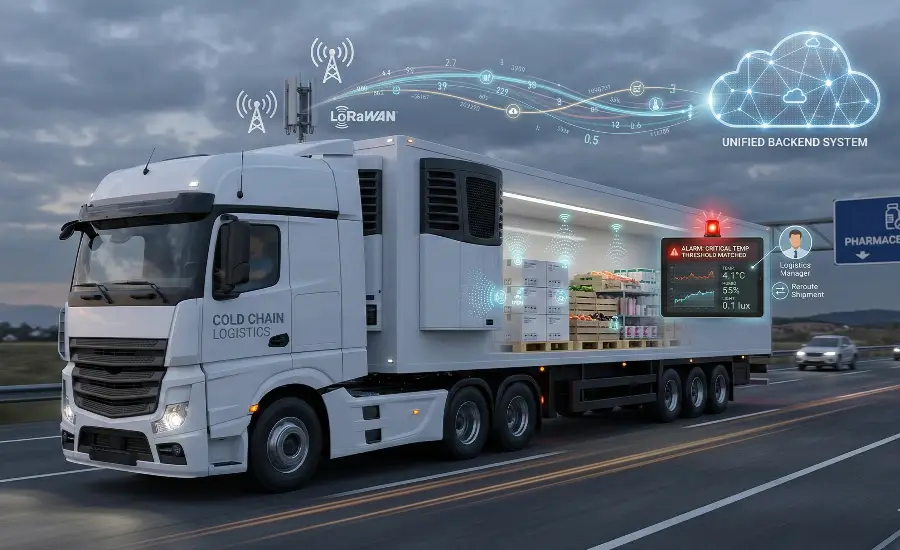
Pharmaceuticals, perishable goods, and temperature-sensitive cosmetics demand stringent environmental regulations. Conventional temperature monitoring is reactive; the damage is only found out when it is delivered. This dynamic is altered by IoT environmental sensors installed in transit vehicles and shipping containers. These sensors keep checking on the temperature, humidity, and light exposure to maintain optimal environmental conditions. This information is sent through the cellular networks or LoRaWAN to the unified backend system by the IoT devices. In case of a malfunction of a refrigeration unit and the internal temperature does not match the safety threshold set in the program, the system sends an immediate alarm. The logistics managers are able to reroute the shipment or send maintenance prior to the spoilage of the product. This real-time intervention dramatically lowers shrinkage, regulatory compliance, and also ensures that only high-quality products make it to the retail stores.
Automated Receiving via RFID
The conventional retail receiving is based on manual barcode scanners. This is a very labor-intensive, human error prone and forms huge bottlenecks at the loading dock. IoT removes this friction through Identyfikacja radiowa (RFID). The stores can use RFID portals mounted at the receiving doors by tagging individual items or pallets with RFID tags at the manufacturing source. As a pallet goes through the portal, the system reads hundreds of tags in a few seconds. The edge device checks the physical receipt with the advanced shipping notice (ASN) and updates the global inventory database immediately in the unified backend. The inventory totals in the physical stores are 100 percent accurate as soon as the truck is unloaded. Such high transparency speeds up the dock-to-shelf cycle and makes sure that the e-commerce fulfillment systems are provided with the correct number of available store inventory.
Store Operations and Digital Shelves
After inventory is received in the store, retail operations are centered on labor efficiency, price accuracy, and shelf availability. This section is the most significant number of daily tasks of store associates, directly impacting operational efficiency.
Unified Dynamic Pricing via ESL
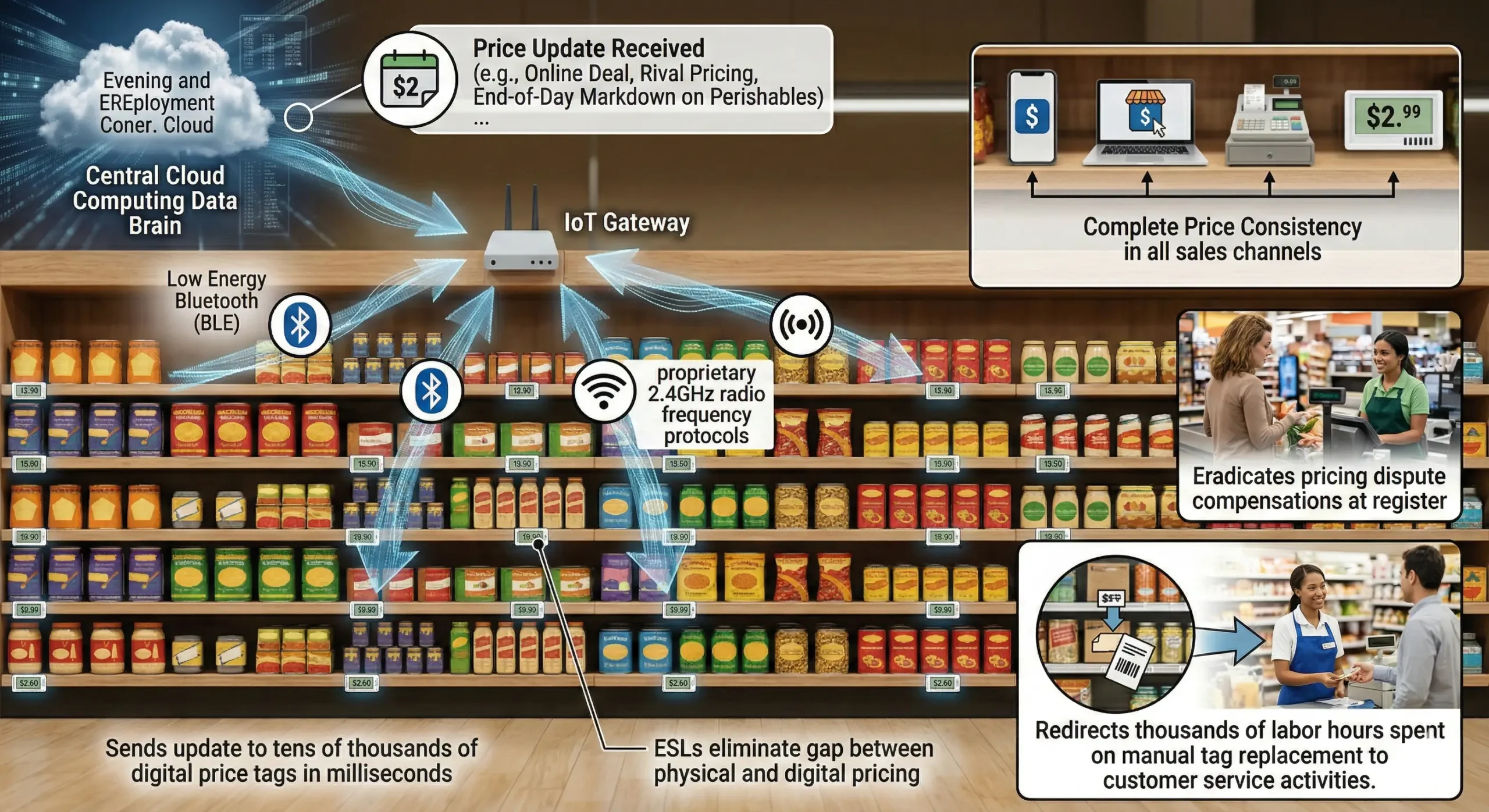
Paper price tags cause a serious bottleneck in operation. Under a single commerce approach, a retailer needs to be capable of adjusting prices in hundreds of stores at once to comply with online deals, respond to rival pricing, or implement end-of-day markdowns on perishable items.
Elektroniczne etykiety na półki (ESL) eliminate the gap between physical and digital pricing. Once the central cloud computing data brain receives an update on a price, the system transmits the new data payload to the store through the IoT gateways. The gateways send the update to tens of thousands of digital price tags on the floor in milliseconds using Low Energy Bluetooth (BLE) or proprietary 2.4GHz radio frequency protocols. This synchronization ensures that there is complete price consistency in all the sales channels. It safeguards profit margins, eradicates pricing dispute compensations at the register, and redirects thousands of labor hours spent on manual tag replacement to customer service activities.
Smart Inventory and Order Fulfillment
Revenue capture is directly related to accurate inventory management. When a product is in the building and not on the shelf, the retailer misses the sale and destroys customer confidence.
- Smart Shelves & Out-of-Stock Prevention: Smart shelves have built-in gravity sensors, weight plates, and optical cameras that track the physical stock levels in real-time. The hardware records the exact weight of the merchandise. The sensor counts the number of units left as the customers delete items and sends the information to the inventory management system (IMS) of the store. Once a particular SKU falls below the set par level, the backend will automatically create a replenishment task and send it to the handheld PDA of the store associate. More importantly, the customer-facing mobile app is also updated in real time by this IoT system, which takes the item off the digital catalog of what is available in-store. This automatic loop will avoid out-of-stock situations, maximize the floor space, and prevent online shoppers from traveling to the store to get a product that is no longer on the shelf.
- Pick-to-Light for Unified Fulfillment: Omnichannel retail demands physical stores to become micro-fulfillment centers. Store associates will be required to select products to Buy Online, Pick Up In-Store (BOPIS) or local delivery. It is very inefficient to go through a huge supermarket to locate five SKUs. Pick-to-Light application addresses this by combining the order management system and the ESL network. An associate scans the order barcode on his or her device when he or she starts a picking route. The system immediately lights up a bright LED indicator on the specific Electronic Shelf Label of the product needed. This visual signal directs the associate to the item, which in effect takes a few seconds to find. This integration of IoT retail applications enhances the speed of picking, minimizes the error in fulfillment, and decreases the cost per order.
Customer Experience and Engagement
The contemporary consumer demands that the physical shopping process be as frictionless and informative as web browsing. Front of the house IoT applications are aimed at eliminating physical barriers to purchase and providing highly contextual digital information, ultimately elevating the overall customer experience.
Frictionless Checkout
The most notable area of friction in physical retail is the traditional checkout line. Frictionless checkout system solutions involve a complicated combination of IoT sensors to remove the register altogether. Computer vision cameras with high definition are used to monitor the movement of customers along the aisles, capturing essential customer behavior. The shelves have weight sensors that ensure that the items that are removed or returned are known. In other implementations, smart shopping carts are used, which have inbuilt barcode scanners, RFID readers, and load cells that authenticate the contents of the basket in real time. Upon leaving the geofenced store area, the system assembles the digital basket and automatically charges the payment using the credit card or mobile payment APP associated with their single retail account, seamlessly facilitating mobile payments. This architecture removes queuing, minimizes the physical space needed to store cash wraps, and provides a very lean user experience, vastly improving the shopping experience.
Interactive Product Discovery
Physical packaging does not have much space to display product information. Customers are becoming more and more interested in the information about the source of ingredients, the place of production, allergy notices, and user feedback before purchasing a product. The retailers can close this gap by incorporating Near Field Communication (NFC) chips or creating dynamic QR codes directly into the Electronic Shelf Labels. Once a customer taps their smartphone on the ESL, the NFC chip immediately sends the browser of the device to the unified e-commerce product page of the brand. In this case, the customer is able to watch high-resolution videos, read customer reviews all over the world, see whether the item is available in other stores in other colors, or add it to their online cart to be delivered to their home. This brings about an endless aisle experience in a small physical space.
Proximity Marketing
Store-wide audio announcements and printed flyers have low conversion rates. Proximity marketing involves the use of Bluetooth Low Energy (BLE) beacons that are placed strategically on the ceiling of the store or directly on the ESL hardware. These beacons are constantly emitting a radio signal. As a customer enters a particular geofenced area (e.g., the electronics aisle) with a downloaded mobile app of the retailer, the beacon sends a ping to their smartphone. The cloud system immediately looks up the purchase history and level of loyalty of the user by parsing historical customer data, creating a very personalized, time-sensitive discount. A push notification is displayed on the screen of the user that provides him or her with a 15 percent discount on HDMI cables within the next twenty minutes. This location-based, contextual targeting has a great chance of making impulse purchases and boosting the total customer lifetime value.
Facility and Environmental Management
A huge system of HVAC systems, lighting arrays, and refrigeration units, which are located behind the retail floor, is consuming vast quantities of energy and capital. The IoT facility management applications are aimed at reducing costs, saving energy, and maintaining operations through effective energy management.
Smart HVAC & Lighting Integration
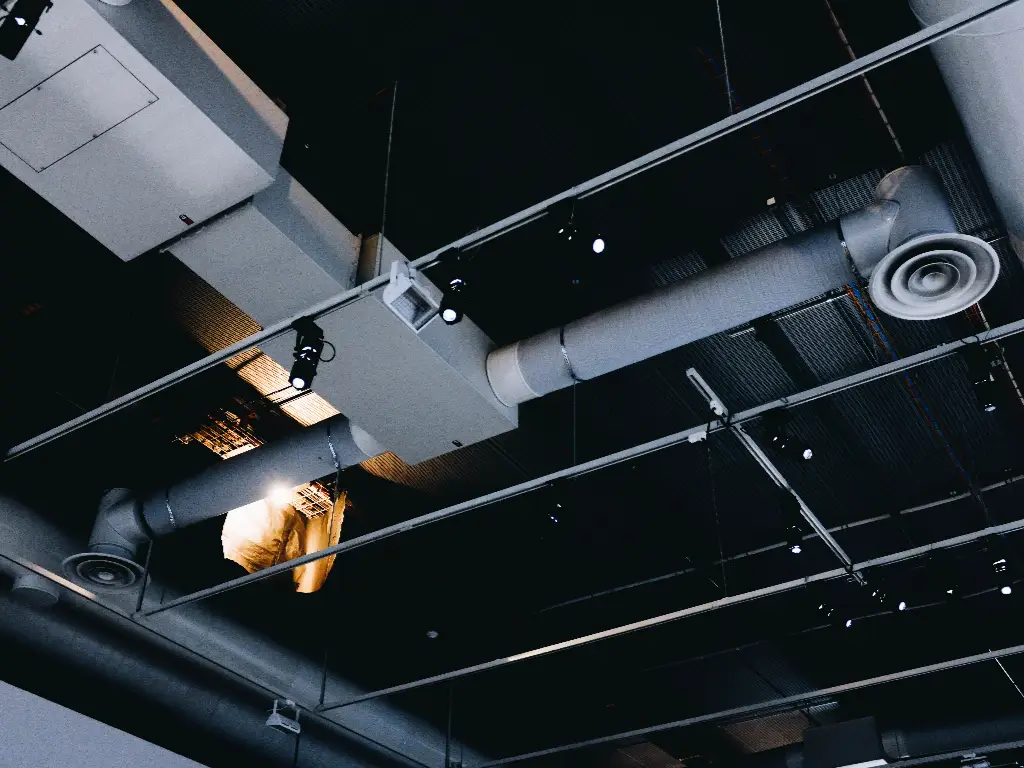
Conventional building management is based on fixed timers. The lights and air conditioning are turned on to full capacity even when there is no one in the store, leading to extreme energy consumption. The IoT integration makes use of ambient light sensors, thermal imaging, and motion detectors to check the real environmental conditions of the store. When the natural light is high in the daytime, the sensors around the large windows will sense the high level of natural light and automatically reduce the artificial LED fixtures in that particular area, utilizing smart lighting. Likewise, when an aisle is not occupied, the system dims the lighting. To control the temperature and improve indoor air quality, the HVAC system is dynamically controlled to reduce the output of the AC depending on the real-time number of people in the building, reducing it when the store is not busy and increasing it during the busiest times. This automatic control saves a lot of electricity, optimizes overall energy usage, minimizes the carbon footprint of operation, and increases the life of the equipment.
Predictive Maintenance for Commercial Assets
Failure of commercial refrigeration leads to huge losses of money through spoiled inventory. Failure of the escalator or automatic doors has a devastating impact on the customer experience. Conventional maintenance is reactive; the technicians are summoned when the machine fails. An IoT solution presents predictive maintenance, which involves the installation of vibration sensors, acoustic sensors, and thermal sensors on the compressors, motors, and moving components of high-value assets to ensure predictive equipment maintenance. These edge devices transmit constant telemetry data to the cloud. This data is analyzed by machine learning algorithms to create a normal operation baseline. When a freezer compressor starts vibrating at a frequency that is not normal or when the compressor is operating at a higher temperature than the standard parameters allow, the system detects the anomaly as a warning that the component is about to fail. The maintenance ticket is automatically created several weeks prior to the actual breakdown of the machine. This vision will avoid disastrous equipment breakdown, eradicate spoilage of products, and will make sure that the cohesive flow of data is not interrupted.
The Core: Unified Data Brain and Analytics
The above-mentioned physical sensors and edge devices are just the data collection mechanisms. The actual architectural worth of retail IoT is achieved in the central processing hub. Raw telemetry is transformed into an implementable business strategy in the unified data brain.
Breaking Data Silos via IoT Gateways
The old retail IT infrastructure is very fragmented. The Point of Sale (POS) system does not communicate with the environmental controls, and the inventory management system works without the surveillance cameras, trapped in disconnected legacy systems.
IoT gateways are the key translation layer and central nervous system of the store. These base stations combine the divergent data streams of thousands of endpoints- ESLs, temperature sensors, RFID portals and overhead cameras across various IoT platforms. The gateway supports various communication protocols (BLE, Zigbee, LoRaWAN, Wi-Fi) and normalizes the data payload with efficient messaging protocols such as MQTT, ensuring robust data management. The architecture breaks down the traditional silos entirely by directing all the physical store data through a centralized and secure gateway network, while strictly maintaining data privacy. The POS, the ERP and the CRM systems are now fed by one, unified data lake containing vast amounts of data. This infrastructure will make sure that when an inventory deduction is made at the physical register, a stock update is immediately made on the e-commerce site, and that there is complete data integrity throughout the entire enterprise.
Empowering Unified Retail Decisions
Uncontextualized data is a liability; contextualized data is a competitive advantage. The cloud brain takes in the normalized data of the gateways to perform complex analytical workloads through advanced data analytics.
The single analytics engine gives the retail executives a dashboard of the whole operation, turning IoT data into valuable insights. The system creates prescriptive insights by overlaying various data sets via comprehensive data analysis. As an illustration, the system can cross-reference the heatmaps of the customer captured by AI cameras with the inventory velocity monitored by the smart shelves. When the data indicates that there is a lot of foot traffic in a certain promotional aisle and there is minimal depletion of inventory, the system will infer that the pricing is wrong, the store layouts are flawed, or the product placement is not clear. It can then automatically cause a dynamic price reduction through the ESL network to drive sales, achieving broader business goals. Moreover, the cloud brain can direct the upstream supply chain operations by examining long-term trends in IoT data. It forecasts precise inventory needs using hyper-local store information, automating the purchase orders for manufacturers and optimizing the warehouse distribution paths to make sure the correct product is in the correct shelf at the correct time.
Your Step-by-Step IoT Implementation Roadmap
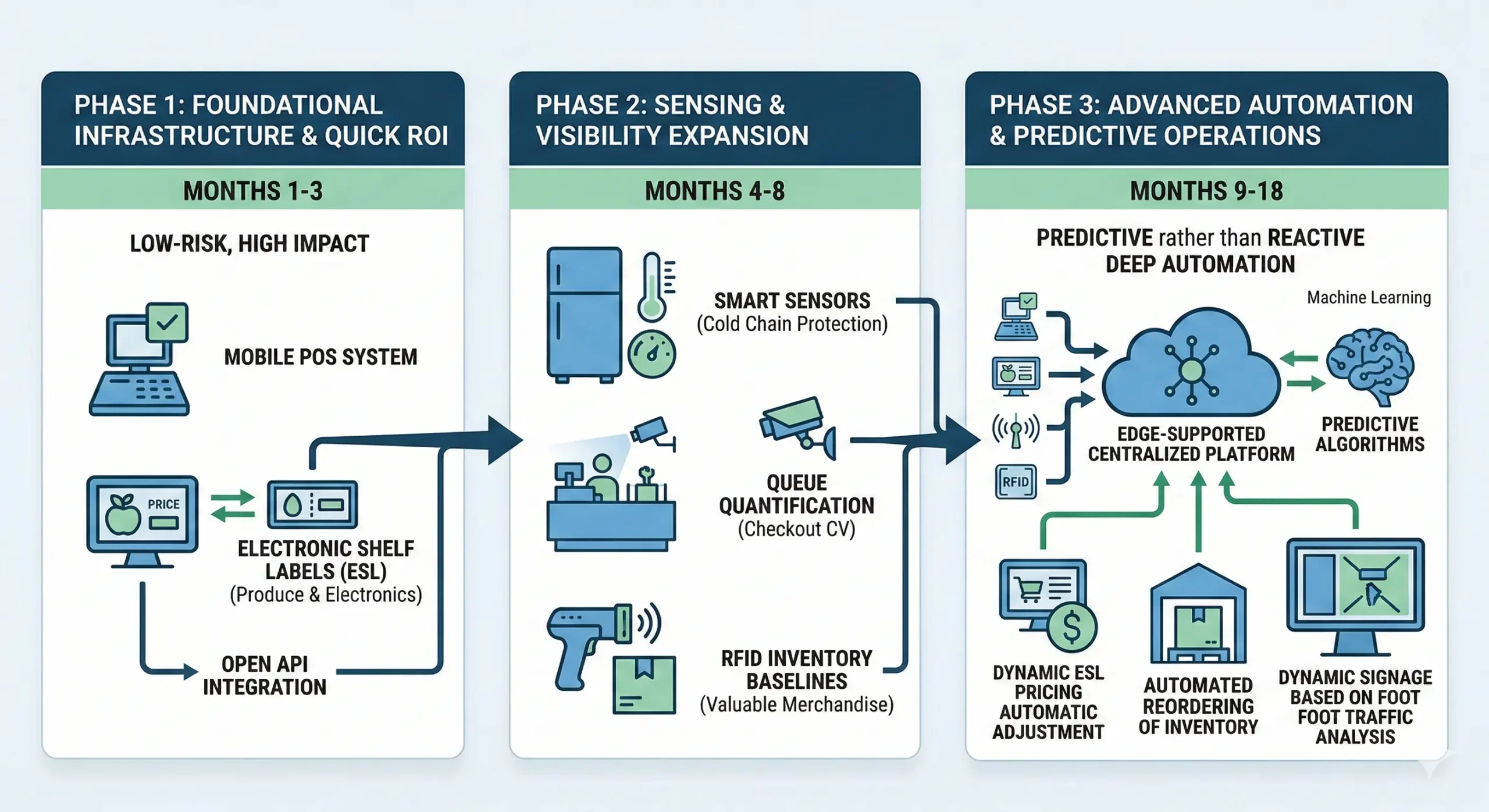
Phase 1: Rapid ROI and Core Infrastructure (Months 1-3). Do not go and computerize the entire store at the same time. Begin with low-risk, high-impact deployments of IoT implementation. Adjust to mobile POS systems to reduce the checkout friction. Meanwhile, use electronic shelf labels in high-margin or volatile price departments (fresh produce or electronics). The short-term ROI of ESLs is the best because manual price work and price accuracy are eliminated. Ensure that the ESL system chosen has an open API to be easily incorporated with the existing software.
Phase 2: Environmental Sensing and Inventory Visibility (Months 4-8). Once the basic pricing and POS infrastructure is established, include smart sensors to expand your IoT retail applications. Install refrigerator temperature and humidity sensors to protect high-value cold chain inventory. Simple computer vision should be implemented at checkout points to measure queues and optimize the distribution of cashiers. Begin RFID tagging of valuable merchandise to establish the correct inventory baselines and streamline supply chain management.
Phase 3: Deep Automation and Predictive Operations (Months 9-18). Real-time tagging of all inventory and full store view within the retail sector. Unify all hardware endpoints into an edge-based, centralized cloud platform. Apply machine learning algorithms to aggregated data. The store is predictive and not reactive, automatically adjusts ESL prices based on algorithms, automatically replenishes its own stock, and dynamically adjusts digital signage or digital screens based on the foot traffic analysis.
Wnioski
The shift from traditional retail to a unified commerce ecosystem is no longer a choice; it is a structural necessity to survive. The use of manual processes, isolated databases, and reactive management prevents scale and destroys profit margins. Retailers transform physical guesswork into digital certainty by strategically implementing IoT applications across the supply chain, the sales floor, and the facility infrastructure.
However, for many retailers initiating their IoT journey, digitizing the entire operation simultaneously can be daunting. The most strategic entry point is the digital shelf. Starting with Electronic Shelf Labels (ESLs) provides immediate operational relief by automating pricing and reducing manual labor, laying a highly visible and high-ROI foundation for a broader store transformation.
This is exactly where we can help. At Zhsunyco, we are deeply committed to the retail IoT revolution, partnering with businesses to transform physical stores into connected digital assets. We understand that upgrading legacy systems is complex, which is why we do more than just manufacture hardware—we provide the tailored advice and strategic support necessary for a seamless digital transition. Our core ESL solutions are engineered specifically for high compatibility and open architecture. Utilizing open base stations with MQTT protocols, our systems ensure a frictionless integration with your existing POS and broader IoT infrastructure. Supported by over a decade of R&D and a robust global supply chain that serves over 41,500 supermarkets, we provide the reliable foundation you need to scale.
The end goal is not simply to install intelligent hardware, but to create a centralized, intelligent data brain that commands the whole process. When your physical shelves communicate with your supply chain, and your pricing strategies coordinate globally in milliseconds, you achieve true operational excellence. Embrace the digitization of the physical space, choose robust, open-architecture hardware collaborators, and create a retail experience that is as fast and accurate as the digital one.

 English
  Russian
  Spanish
  German
  Arabic
  French
  Bulgarian
  Polish
  Romanian
  Turkish