


Окончателно ръководство за ценовите стратегии на супермаркетите през 2026 г.
Окончателен план за ориентиране в икономиката на кошницата, защита на маржовете и използване на физическото изпълнение на място в съвременния ритейл пейзаж.
Икономическа основа на ценовите стратегии на супермаркетите
В силно конкурентния сектор на хранителните стоки икономическата реалност е безмилостна. В продължение на десетилетия световната индустрия на супермаркетите работи с минимални маржове на нетна печалба, които обикновено се движат между 1% и 3%.[1]. В тази среда на големи обеми и ниски маржове ценообразуването вече не може да се разглежда през опростената леща на надценките "разходи плюс". Вместо това към съвременните ценови стратегии на магазините за хранителни стоки трябва да се подхожда като към сложно, балансиращо изкуство на Икономика на кошницата (рентабилност на кошницата) и възприемането на потребителските цени. Когато допустимата грешка е само част от процента, всеки цент, коригиран на рафта, трябва да бъде прецизно изчислен.
Основната логика се основава на добре документирано когнитивно отклонение на потребителите: средният купувач помни точните референтни цени само на много ограничен брой високочестотни продукти (често по-малко от 50 артикула от 30 000 до 50 000 артикула в магазин). Супермаркетите трябва да се възползват от тази когнитивна асиметрия. Като поддържат хиперконкурентни цени на тези силно видими стоки, търговците на дребно създават всеобхватна психологическа котва за "ниски цени" в съзнанието на потребителя, убеждавайки го, че целият магазин предлага по-висока стойност.
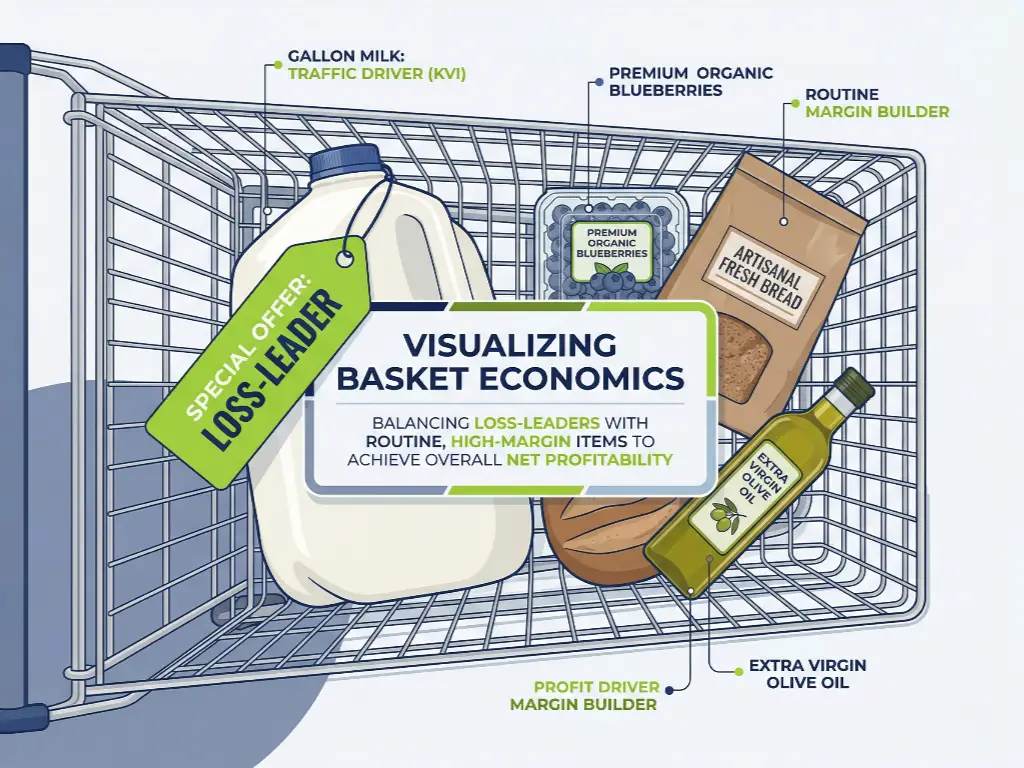
Намаляването на цените на високочестотните стоки обаче неизбежно свива Преден ръб (пряката печалба, получена от продажната цена минус разходите за продадените стоки). За да оцелеят, операторите на дребно трябва да овладеят организирането на общата потребителска кошница. Стратегическата цел не е да се максимизира маржът на всеки отделен артикул, а да се гарантира, че загубата или рентабилността на един основен артикул се компенсира от покупката на три или четири рутинни артикула с по-висок марж по време на едно и също пътуване. Освен това опитните търговци на дребно отчитат Заден марж елементи, като например отстъпки от страна на доставчиците, търговски промоции и програми за отстъпки за субсидиране на отстъпките от предния край. В крайна сметка успешната стратегия за ценообразуване действа като невидима ръка, която направлява пътя на купувача, за да се получи положителен нетен марж на касата.
Основни модели на ценообразуване: EDLP срещу стратегии High-Low
В продължение на десетилетия пазарът на дребно на хранителни стоки е доминиран от две основни ценови философии. Вместо да ги възприемат като взаимно изключващи се догми, съвременните търговци на дребно трябва да разберат тяхната оперативна механика, за да ги адаптират към регионалните нюанси и реалностите на веригата за доставки. Сляпото копиране на модела на конкурент, без да се съобрази с неговата инфраструктура, е рецепта за катастрофа.
Ежедневно ниски цени (EDLP) и защита на "псевдо EDLP"
Традиционният модел на ежедневно ниски цени (EDLP) се основава на предлагането на потребителите на постоянно ниски цени за дълъг период от време, без да са необходими екстремни промоционални събития. Макар че гиганти като Walmart или Aldi успешно са използвали EDLP, техният успех се основава на неповторима хегемония във веригата за доставки, безмилостна рационализация на стоковите единици и огромни темпове на оборот на стоковите запаси, с които независимите оператори просто не могат да се сравняват.
За независимите търговци на хранителни стоки и средните по големина регионални вериги опитът за чиста стратегия за EDLP срещу мултинационалните гиганти е пряк път към намаляване на маржа. Вместо това съвременният подход е "Псевдо EDLP" (или хибридна EDLP) Защита. Този тактически наръчник включва обособяване на специфични, силно видими категории, като млечни продукти с частна марка, ежедневно пресни хлебни изделия или основни продукти от местен произход, и прилагане на модела EDLP единствено за тях. По този начин по-малките търговци на дребно изграждат локално възприятие за ниски цени, без да намаляват маржовете на целия си инвентар. Можем да погледнем към европейските регионални дискаунтъри или независими търговци на хранителни стоки, които заобикалят ценовите войни в целия магазин, фиксирайки абсолютно най-ниските цени само на "чувствителните слепи места", за да защитят ефективно пазарния си дял срещу по-големите си конкуренти.
Промоционално ценообразуване High-Low
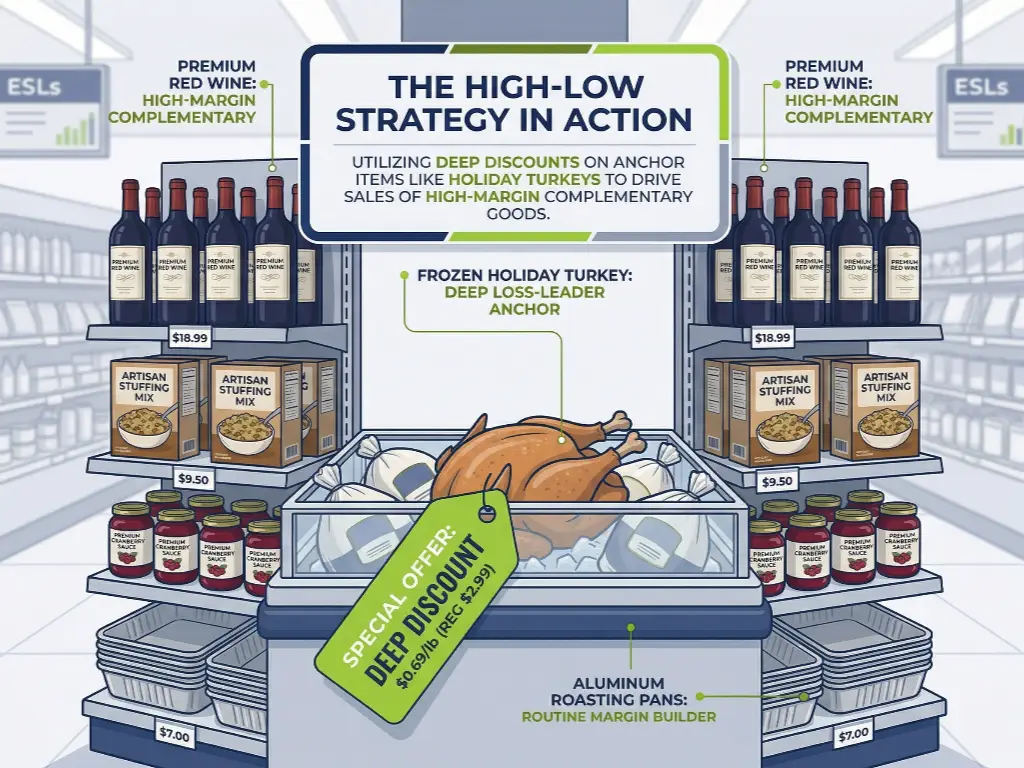
Стратегията за ценообразуване "високо-ниско" (Hi-Lo) работи в ритъма на контраста. Търговците на дребно поддържат по-високи ежедневни цени на по-голямата част от стоките си, но правят големи, временни отстъпки на избрани артикули чрез седмични циркуляри и крайни промоции. Това създава мощно психологическо преживяване на "лов на съкровища", стимулирайки страха на потребителя от пропуснати ползи (FOMO) и стимулирайки незабавния трафик в магазина.
Помислете за класическата промоция на пуйка за Деня на благодарността в Северна Америка. Супермаркетът може да продава замразени пуйки на голяма загуба (понякога стотинки за килограм). Тази екстремна промоция обаче е стратегически замислена. Потребителят, който идва за пуйката със силно намаление, неизбежно ще закупи допълнителни стоки с висок марж: алуминиеви тигани за печене, занаятчийски смеси за плънка, сос от червени боровинки и първокласни вина. Въпреки че моделът Hi-Lo ефективно увеличава средната стойност на сделката (ATV), той налага огромна тежест върху оперативната ефективност, изисквайки постоянна смяна на етикетите на рафтовете, прецизно прогнозиране на търсенето за управление на пиковете в запасите и внимателно управление на промоционалните вериги за доставки.
Екосистемата на KVI и механиката на Loss Leader
Майсторството на ценообразуването в хранителните магазини се крие в прецизното категоризиране и манипулиране на портфолиото от запаси. Архитектурата на един печеливш магазин разчита до голяма степен на симбиозата между ключовите стоки (KVI) и фоновите продукти с висок марж. Това е мястото, където ценообразуването преминава от математиката към поведенческата психология.
Идентифициране на ключови елементи на стойността (KVI)
Продукт с ключова стойност (KVI) е продукт, чиято цена служи като барометър за цялостното възприятие на потребителя за достъпността на магазина. Изборът на правилните KVI е наука, основана на обективни измерения: висока честота на покупките, силна разпознаваемост на марката или стоката и абсолютна прозрачност на цената. Един критичен индустриален критерий изисква основното портфолио от KVI на стандартен супермаркет да бъде строго ограничено до около 500-800 артикула (обикновено по-малко от 5% от общия брой артикули в магазина).[2]. Разширяването на списъка с KVI над този праг разводнява стратегията и води до катастрофално намаляване на маржа.
Кръстосано субсидиране за възстановяване на маржа
За да могат безопасно да внедрят KVI и Loss Leaders, търговците на дребно трябва да изградят строга екосистема за кръстосано субсидиране. Фатална грешка, допускана от оператори аматьори, е използването на бързо развалящи се стоки с променливо тегло (като прясно първокласно месо) като лидери на загубите. Високите нива на свиване и нестабилността на студената верига могат незабавно да превърнат промоцията на месо в опустошителна финансова загуба.
Правилното прилагане се основава на стандартизирани, строго контролирани потребителски опаковани стоки (CPG) или стандартни стоки. Сценарият е изчислен: Купувачът е привлечен в магазина от силно рекламирана, най-ниска цена на галон стандартно пълномаслено мляко или кутия яйца клас А (перфектни KVI, стимулиращи трафика). Докато навигира из умишленото оформление на магазина, той се насочва към "слепи продукти" - продукти с ниска ценова прозрачност и висок марж. Заедно с яйцата те взимат кутия с органични боровинки с висок марж; близо до млякото те взимат пълноценен занаятчийски пълнозърнест хляб. Загубата от млякото се възстановява веднага, а общата кошница носи здравословна нетна печалба.
Създатели на рутинни маржове
Специални сосове, органични продукти, занаятчийска пекарна, първокласни продукти за здраве и красота. (Ниска ценова чувствителност, висока рентабилност)
Движещи сили на печалбата
Храни за удобство, готови за консумация ястия, сезонни импулсивни покупки. (Висока честота, висока рентабилност)
Фон Скоби
Общи консерви, основни почистващи препарати за домакинството. (Ниска честота, нисък марж - поддържане на паритет)
Драйвери на движението (KVI)
Стандартно мляко, яйца, банани, популярни маркови газирани напитки. (Висока честота, нулев/отрицателен марж)
Психологически тактики на ценообразуване за възприемане от потребителите
Освен макроикономическите модели, ценовите стратегии на супермаркетите трябва да отчитат и микровзаимодействията на границата на рафта. Поведението на потребителите е силно повлияно от евристични мисловни съкращения, използвани за вземане на бързи решения за покупка в среда, богата на стимули. Точните цифри, изписани на етикетите с цените, имат огромна психологическа тежест.
- Ценообразуване на чара (нечетен и четен ценоразпис): Класическата стратегия за завършване на цените с .99 или .95. Тъй като потребителите четат отляво надясно, цена от $2.99 се закотвя когнитивно като "два долара и нещо", а не като "почти три долара". Контекстът на изпълнението обаче е от съществено значение. Макар че очарователното ценообразуване работи изключително добре в централните търговски пътеки за бързооборотни стоки, прекомерното използване на ".99" в секциите за първокласни органични или занаятчийски продукти може изкуствено да понижи възприятието за марката, където целите числа (например $12.00) сигнализират за качество и прозрачност.
- Ценообразуване на множество единици (визуално закрепване на знаменателя): Оформяне на цената като "2 за $5.00" вместо "$2.50 за брой". Дори когато POS системата на магазина математически позволява закупуването на един артикул за $2,50, визуалната котва на числото "2" заобикаля логическата обработка на потребителя (мислене по система 2) и предизвиква автоматична, импулсивна реакция (мислене по система 1) за поставяне на два артикула в количката, което незабавно увеличава скоростта на обема с двуцифрено число.
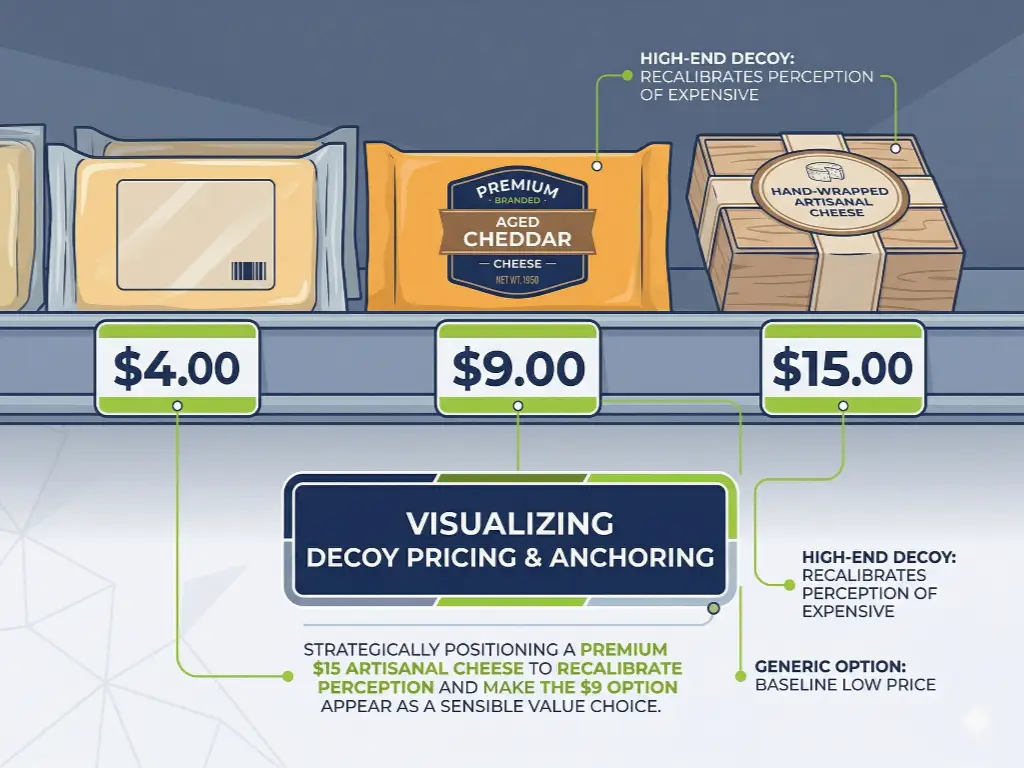
- Ценообразуване на примамки и закрепване: Поставяне на първокласен продукт с висока цена в непосредствена близост до целевия продукт. Занаятчийското сирене $15 прави премиум чедъра $9 до него да изглежда като разумен компромис, ориентиран към стойността, докато сиренето $9 може да изглежда скъпо, ако е поставено до генерична марка $4. Тази пространствена връзка пренастройва вътрешната концепция на купувача за "скъпо".
Стратегически подбор: Подбор на правилния модел за вашия магазин
Не съществува универсална панацея при ценообразуването на дребно. Стратегията трябва да бъде неразривно свързана с физическия отпечатък на магазина, местните демографски характеристики и зрелостта на веригата за доставки. Разгръщането на стратегия за високи маржове в силно чувствителен към цените квартал със сини якички ще доведе до отчуждаване на клиентите, точно както опитът за EDLP без необходимия обем на доставките ще доведе до фалит. Следващата сравнителна матрица очертава как да се съгласуват моделите на ценообразуване с оперативните реалности.
| Ценова стратегия | Идеален формат и размер на магазина | Целева демографска група | Необходима сила на веригата за доставки | Риск от волатилност на маржа |
|---|---|---|---|---|
| EDLP (Ежедневна ниска цена) | Големи хипермаркети, големи магазини за продажба на дребно. | Силно чувствителни към цените семейства, които купуват на едро. | Екстремни. Изисква огромни ангажименти за обем. | Ниска волатилност, но тънки базови маржове. |
| Pseudo-EDLP (хибрид) | Средно големи регионални вериги, независими търговци на хранителни стоки. | Квартали със смесени доходи, които търсят удобство. | Умерено. Фокусира покупателната си способност върху конкретни категории. | Умерено. Защитава рентабилността, като същевременно защитава възприятието. |
| Hi-Lo Promotional | Традиционни супермаркети, крайградски центрове за хранителни стоки. | Събирачите на череши реагират на седмичните циркуляри. | Висока гъвкавост. Изисква силни взаимоотношения с доставчиците. | Висока. Маржовете варират в широки граници от седмица на седмица. |
| Premium / KVI-Light | Градски бутикови магазини за хранителни стоки, органични пазари. | Потребители с високи доходи, които се грижат за здравето си. | Специализирани. Снабдяване с уникални или местни занаятчийски продукти. | Нисък обем на риска, чувствителен към икономически спадове. |
Изпълнение и прилагане: От стратегията до рафта
И най-сложната ценова стратегия, замислена в заседателната зала на корпорацията, е напълно безполезна, ако се разпадне на физическия рафт. Стратегията е само теория, докато не бъде изпълнена чрез технология и оперативна дисциплина. Пропастта между намеренията и изпълнението е мястото, където маржовете на хранителните магазини изчезват.
Използване на POS данни за динамични корекции
Съвременното ценообразуване е жив, дишащ механизъм, който се управлява от данни. Търговците на дребно трябва да използват данните от скенерите, генерирани от техните системи за продажба (POS), за да извършват хиперлокални, динамични микрокорекции като основна част от техните управление на цените на дребно стратегия. Мениджърът на магазина, който използва надежден анализ, може да изтегли доклад за "бавно движещи се запаси" от уикенда, да го съпостави със събитията в местната общност и да формулира локална промяна на цените до понеделник сутринта. Съществува обаче една важна уговорка: данните за ценообразуването не трябва да се съхраняват отделно. Всеки алгоритъм за динамично ценообразуване трябва да бъде безпроблемно интегриран с нивата на складовите наличности в реално време на системата за планиране на ресурсите на предприятието (ERP), за да се предотврати катастрофалният сценарий на силно промотиране на артикул, който вече е изчерпан.
Физическото изпълнение: Вашите решения за ESL
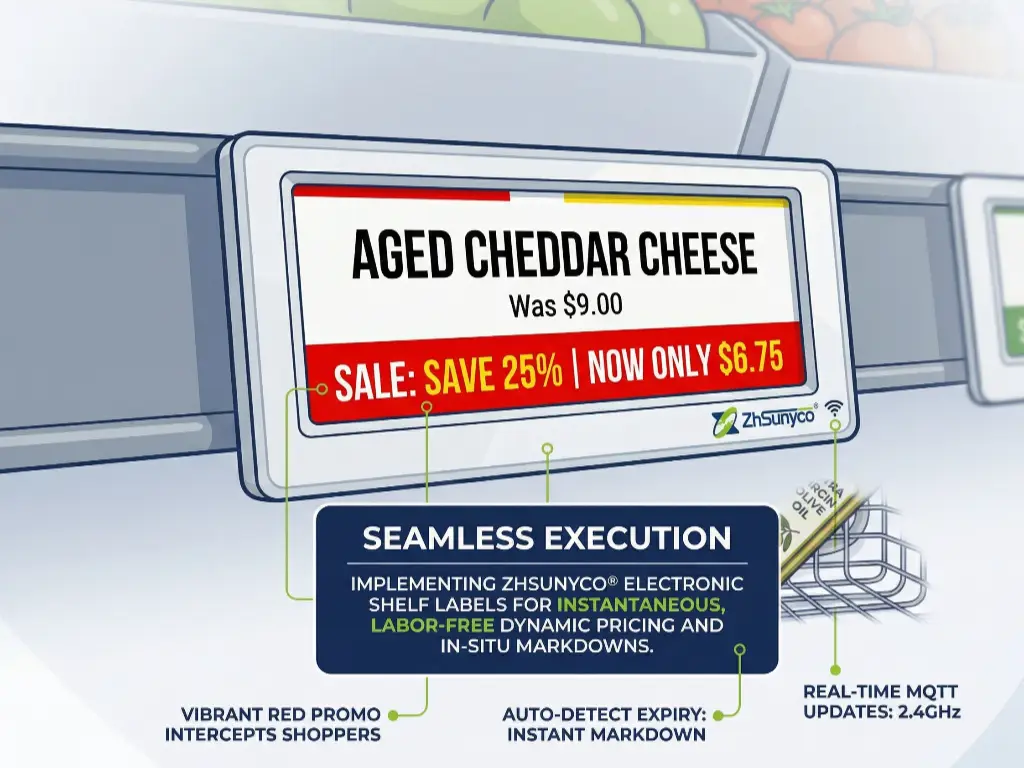
Успешното динамично ценообразуване изисква незабавна физическа реакция. Въведете Zhsunycoо 2.4GHz електронен етикет за рафтове (ESL)активиране на In-situ Markdown. Когато ERP системата открие мляно говеждо месо с изтекъл срок на годност, намалението се извършва автоматично. Продуктът не се движи. Не се ангажира персонал. Вместо това Zhsunycoо ESL незабавно се актуализира чрез MQTT. Използвайки иновативно четирицветно електронно мастило (червено/бяло/жълто/черно), етикетът мига с ярко червено промоционално оформление, като незабавно привлича купувачите, за да стимулира разтоварването.
С процент на дефекти от 0,0018%, 5-10-годишен живот на батерията и софтуер с нулева лицензна такса, Zhsunyco ви дава възможност да изпълнявате безпроблемно сложни цени. Елиминирайте тесните места в работната сила и защитете маржа си от 1,5%.

 English
  Russian
  Spanish
  German
  Arabic
  French
  Bulgarian
  Polish
  Romanian
  Turkish
  Portuguese