


Секторът на търговията на дребно е подложен на постоянен натиск да се променя в условията на променящото се потребителско търсене, непрекъснатите нарушения във веригата на доставки, недостига на работна ръка и бързия темп на развитие на технологиите в цифровата ера. През годините пазарът е бил затрупан с обещания от страна на доставчиците по отношение на цифровите подобрения. Това звучене кара повечето организации в сектора на търговията на дребно да харчат много пари за софтуер и хардуер с надеждата, че ще видят незабавни подобрения в оперативната си ефективност и работата на магазините. Съществува обаче огромно несъответствие между закупуването на технологии и реализирането на реална промяна в бизнеса на дребно. Ръководителите на фирми за търговия на дребно, ИТ лидерите и оперативните мениджъри се нуждаят от ясна обективна рамка, която да ги води през този процес.
Това ръководство развенчава митовете за внедряването на технологиите за търговия на дребно. То предлага структурен метод за оценка на съществуващите възможности, модернизация на наследените системи като част от стабилна стратегия за цифрова трансформация, предотвратяване на добре документирани неуспехи при внедряването и създаване на измерими мерки за успех.
Какво всъщност представлява цифровата трансформация в търговията на дребно?
Цифровата трансформация в търговията на дребно често се тълкува погрешно като просто въвеждане на сайт за електронна търговия, внедряване на мобилно приложение или прехвърляне на стари бази данни на сървър за изчисления в облак. Тези дейности са дигитализация, преобразуване на аналогови процеси в цифрови. Истинската промяна изисква много по-радикална структурна и оперативна промяна.
В основата си цифровата трансформация на търговията на дребно е пълна реорганизация на бизнес моделите, за да се обединят хората, продуктите и физическите магазини в непрекъснати потоци от данни в реално време. Тя е изцяло ориентирана към клиентите, като има за цел да подобри цялостното им преживяване. Тя включва премахването на вътрешните силози на отделите, за да се гарантира, че маркетингът, управлението на запасите, операциите в магазините и обслужването на клиентите се управляват от един и същ източник на истина.
Трансформираната цифрова екосистема за търговия на дребно не разглежда физическите магазини и онлайн платформите като независими субекти, които се конкурират за приходи, а като взаимосвързани възли. Магазинът от тухли и монети се превръща в локализиран център за изпълнение на поръчки, интерактивен шоурум и център за обслужване на клиенти едновременно. Крайната цел е да се използва информация в реално време, за да се предвиди поведението на потребителите, да се оптимизира независимото разпределение на запасите и да се сведе до минимум оперативното триене, което намалява маржовете на печалба, като в крайна сметка се генерират значителни икономии на разходи.
Модел на зрелостта на цифровата трансформация в търговията на дребно
Без подходяща база за текущите си оперативни и технически възможности организациите не могат да планират ефективно технологична пътна карта. Моделът за зрялост на цифровата трансформация в търговията на дребно е диагностичен модел, който позволява на ръководните екипи да оценят настоящата реалност на работа и да определят следващия курс на действие по пътя на цифровата трансформация.
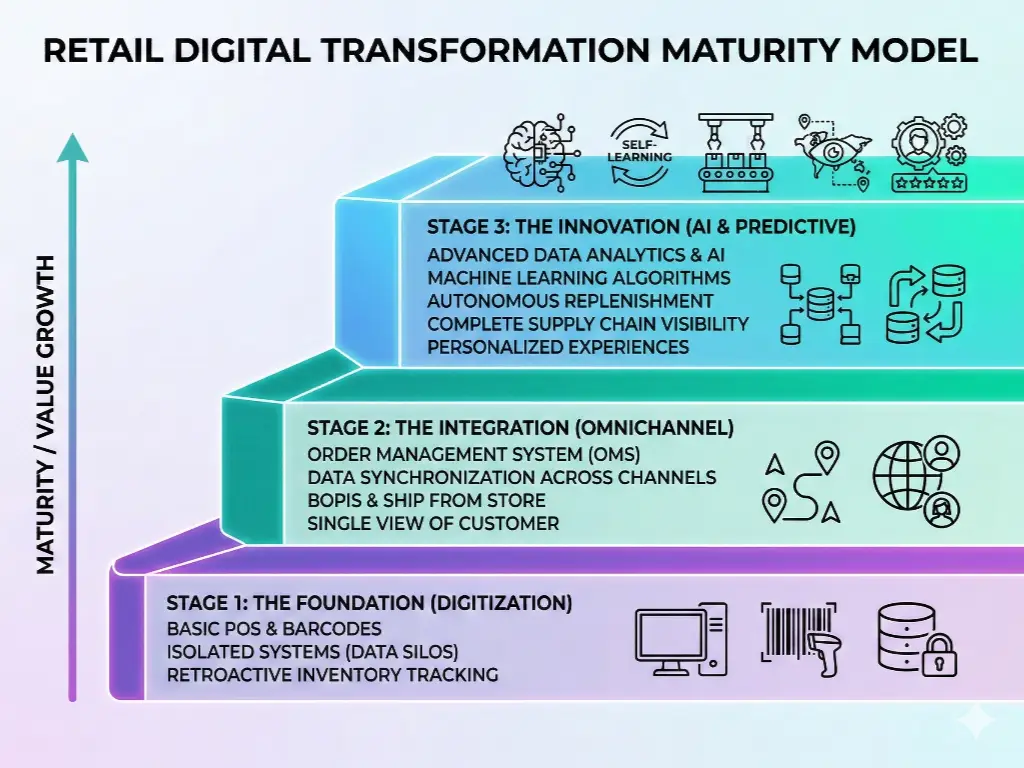
Етап 1: Основа (цифровизация)
Търговците на дребно на първия етап са използвали прости цифрови инструменти, за да заменят ръчните операции. Операциите се основават на основни Системи за продажба на място (POS), общо сканиране на баркодове и управление на местни бази данни. Проследяването на наличностите обикновено е ретроспективно и се основава на пакетна обработка в края на деня или в края на седмицата.
Въпреки че тези организации създават данни за клиентите, те са ограничени до изолирани системи. Сайтът за електронна търговия не е в комуникация в реално време със системата за управление на запасите на физическия магазин. Данните за клиентите се съхраняват в различни бази данни и поради това не могат да се провеждат персонализирани маркетингови кампании. Организациите на етап 1 често имат висок процент грешки в точността на инвентара, изпитват затруднения с ръчното съгласуване, което отнема производителността на служителите, и имат високи разходи за привличане на клиенти поради неефективни маркетингови разходи.
Етап 2: Интеграция (Omnichannel)
Тази фаза се характеризира със стратегическата връзка между различни системи, за да се формира единна оперативна перспектива. Търговците на дребно на етапа на интеграция се фокусират върху синхронизирането на данните във всички точки на контакт с потребителите и вътрешни отдели, като безпроблемно свързват онлайн и офлайн каналите. Това бележи прехода от многоканално присъствие към истинско омниканална търговия на дребно, където разграничението между цифровите и физическите витрини се разтваря в полза на единно пътуване на клиентите.
Приемането на ефективна система за управление на поръчките (OMS) служи като централна нервна система на този етап. Системата за управление на поръчките (OMS) интелигентно насочва поръчките в зависимост от наличността на стоките в мрежата и близостта до клиента. Това дава възможност за функции като "Купи онлайн, вземи в магазина" (BOPIS) и "Изпрати от магазина", което пряко повишава удовлетвореността на клиентите. Профилите на клиентите се консолидират в една база данни и те могат да бъдат обслужвани и проследявани по отношение на лоялността на клиентите, без значение дали транзакцията се извършва чрез мобилно приложение, десктоп браузър или на физическо гише. Оперативният акцент вече не е върху събирането на данни, а върху използването им за постигане на междуканална ефективност и по-високи нива на конверсия.
Етап 3: Иновацията (изкуствен интелект и прогнозиране)
Най-високото ниво на трансформация на търговията на дребно променя организационната позиция от реактивна към прогнозна. На това ниво на зрялост търговците на дребно разполагат с чиста и интегрирана архитектура на данните с ниска латентност, която може да се използва за поддръжка на усъвършенствани анализи на данни и изкуствен интелект.
По време на този етап алгоритмите за машинно обучение се използват за анализ на данни за минали продажби, местното време и демографските тенденции на пазара, за да се вземат решения за попълване на запасите автоматично, без човешка намеса. Решенията за генеративен ИИ помагат да се генерират персонализирани препоръки за продукти и динамични ценови планове в реално време. Видимостта на веригата за доставки е пълна, а сензорите са свързани, за да наблюдават стоките от производителя до рафта в конкретния магазин. Технологиите на етап 3 са автономни, за да максимизират маржовете, а на човешките служители остават взаимодействията с клиенти с висока стойност и бизнес планирането, което представлява крайните ползи от цифровата трансформация.
Основни технологии и съвременна архитектура на търговията на дребно
Първото изискване е да се разберат бизнес целите и след това да се изпълнят целите; необходимо е да има ясно съгласуване на хардуера, софтуера и основната ИТ архитектура. Липсата на съгласуване между бизнес целите и техническата инфраструктура гарантира неуспех на инициативите за цифрова трансформация.
Ключови технологии, които движат еволюцията
Съществуват редица конкретни цифрови технологии, които служат като основен двигател за промяна на операциите на дребно в статична среда към динамични и богати на данни екосистеми.
Електронни етикети за рафтове (ESL) и дигитализация на ръбове: Физическият край на рафта често е най-отдалечената точка в търговската мрежа. Електронните етикети за рафтове запълват тази последна празнина между централизираните цифрови бази данни и физическия дизайн на магазина. Търговците на дребно могат да прилагат динамични стратегии за ценообразуване на хиляди места в реално време, като заменят традиционните хартиени етикети с мрежови цифрови дисплеи и управляват процеса на ценообразуване централно чрез ERP или механизъм за ценообразуване. Тази синхронизация премахва високите разходи за труд и процента на грешките при ръчното издаване на билети и осигурява пълна съгласуваност на многоканалното ценообразуване. Освен това ESL с NFC или QR технология могат да превърнат пасивния рафт в интерактивна точка за контакт, позволявайки на потребителите в магазина да преглеждат разширени цифрови каталози, продуктови ревюта или алтернативни възможности за изпълнение на мобилните си устройства, обогатявайки преживяването при пазаруване.
Интернет на нещата (IoT) и RFID: Видимостта на наличностите в реално време е основната основа на съвременната търговия на дребно. Устройствата на IoT, интелигентните рафтове и RFID етикетите позволяват на системите да следят точното местоположение и движение на материалните продукти, без служителите да ги сканират ръчно. Тази технология премахва т.нар. инвентар-призрак (продукти, които са регистрирани като налични, но не са на рафта или са изгубени в задната стая) и гарантира, че информацията, която се показва на клиентите, пазаруващи онлайн, е вярно отражение на реалността в местния магазин.
Езера от данни и усъвършенстван анализ: Търговците на дребно генерират големи количества неструктурирани данни, като например история на сърфиране на клиентите, видеоанализ на камерите на магазините и мнения в социалните мрежи. Този тип големи данни не могат да бъдат обработени с помощта на традиционните релационни бази данни. Езерата от данни предлагат централизирано облачно хранилище, където могат да се консолидират и изследват структурирани и неструктурирани данни. По този начин се разтварят информационните силози между отделите по финанси, маркетинг и управление на веригата за доставки, което позволява сложна междуфункционална отчетност.
ИИ за разговори и компютърно зрение: В допълнение към конвенционалните чатботове за обслужване на клиенти, настоящите интерфейси за разговор с изкуствен интелект могат да осъществяват директен достъп до инвентарните бази данни, за да предоставят на клиентите информация за наличността на продуктите в реално време и за местоположението на коридорите. В същото време технологията за компютърно зрение, реализирана чрез камери в магазините, може да се използва за сканиране на пешеходния трафик, оптимизиране на оформлението на магазините, проследяване на изчерпването на рафтовете и издаване на предупреждения за изпращане на персонал в зоните, където се развиват опашки на касите в реално време.
Монолитна срещу съставна търговска архитектура
Системната архитектура е най-голямата пречка пред цифровата трансформация в търговията на дребно. В миналото традиционните търговци на дребно инвестираха в монолитни системи, които представляват големи, всеобхватни софтуерни пакети, в които предният потребителски интерфейс, бек-енд логиката и базата данни са тясно свързани в една-единствена кодова база.
Въпреки че монолитните системи са лесни за внедряване в краткосрочен план, те се превръщат в негъвкаво бреме в дългосрочен план. Всяка актуализация на една функция трябва да бъде тествана за регресия на цялата система, което води до бавни цикли на внедряване, високи разходи за поддръжка и изключителна обвързаност с доставчика.
Настоящата търговия на дребно изисква Composable Commerce (или Headless) архитектура. При тази архитектура нивото на представяне на предния край (уебсайт, мобилно приложение или интерактивен киоск в магазина) е напълно отделено от бизнес логиката на задния край (маршрутизиране на инвентара, механизми за ценообразуване, обработка на плащания). Тези автономни микрослужби си взаимодействат чрез интерфейси за програмиране на приложения (API).
Този модулен дизайн позволява на ИТ отделите в търговията на дребно да заменят търсачката, да обновят шлюза за плащане или да внедрят нова програма за лоялност, без това да се отрази на останалата част от оперативната екосистема. Композитната архитектура предлага техническата гъвкавост, необходима за реагиране на пазарните промени за дни, а не за месеци, което осигурява ясно конкурентно предимство.

Защо 70% от цифровите трансформации в търговията на дребно се провалят
Въпреки че в инициативите за цифрова трансформация са инвестирани много средства, статистическите данни от индустрията показват, че повечето от тях са неуспешни. Тези неуспехи едва ли се дължат на самата технология. По-скоро те са заложени в неправилно структурно управление, лошо архитектурно планиране и дълбоко неразбиране на взаимодействието на технологиите с човешките оператори.
Капанът "първо техниката, после хората"
Повечето ръководни екипи възприемат цифровата трансформация като дейност, свързана с ИТ поръчките. Те купуват усъвършенствани софтуерни платформи и ги внедряват в предните линии с надеждата да постигнат незабавна производителност. Тази методология не взема предвид човешкия аспект на управлението на промените и тестовете за приемане от потребителите (UAT).
Процентът на внедряване спада, когато служителите в магазините и складовете се запознават със сложни нови системи без подходящо обучение или ясна визия за стратегическата цел. Работниците ще са склонни да се върнат към ръчни обходни пътища или към ИТ операции в сянка, което ще направи новите технологии безполезни и ще замърси централния фонд от данни с невярна информация.
Промяната трябва да бъде насочена към клиента. Интерфейсите на системата трябва да са удобни за ползване и да са съобразени така, че да сведат до минимум познавателната тежест за служителя. Преди внедряването организациите трябва да похарчат много пари за обучение по дигитална грамотност. Ключовите показатели за ефективност (KPI) в първата фаза на внедряване трябва да са свързани изцяло с процента на приемане на системата и обратната връзка с потребителите, а не с пряката финансова възвръщаемост. Технологиите трябва да се поставят като инструмент, който ще позволи на служителите да изпълняват задълженията си по-удобно, а не като административна тежест или инструмент за наблюдение.
Потъване в техническия дълг на наследената система
Често срещаната ситуация в областта на ИТ в търговията на дребно е, че фирмата се опитва да внедри съвременни многоканални изживявания, като използва локална система за планиране на ресурсите на предприятието (ERP), инсталирана преди десет или петнадесет години. Тези стари системи са проектирани да обработват данни на партиди за една нощ, а не в реално време и непрекъснато, както е необходимо за новите потребителски приложения.
Всяко усилие за директна интеграция на модерна система за електронна търговия, базирана на облак, с уязвима наследена ERP система вероятно ще доведе до катастрофални системни сривове, проблеми със синхронизирането на данните, висока латентност и огромни технически задължения.
Търговците на дребно не трябва да използват стратегията "разкъсай и замени". Замяната на основната ERP система е скъпа, рискована и нарушава непрекъснатостта на бизнеса през годините. По-скоро ИТ ръководството трябва да използва т.нар. модел на задушаваща смокиня с помощта на API middleware. По-старата система може да бъде интегрирана със съвременните микроуслуги чрез изграждане на API шлюз или обвивка около наследената ERP. Тази архитектура дава възможност на бизнеса безопасно да извлече необходимите данни от старата система и постепенно да мигрира определени функции на бизнес логиката (като маршрутизиране на запасите или правила за ценообразуване) към нови модули, базирани на облака, с течение на времето. Тази постепенна стратегия помага за намаляване на оперативния риск и позволява да се премине към цифровизация наведнъж.
Действащи стъпки за започване на цифровата трансформация в търговията на дребно
Пътят към цифровата зрялост се различава значително в зависимост от размера, бюджета и текущата инфраструктура на организацията за търговия на дребно. Въпреки това необходимостта от систематичен, постепенен процес е универсална за всички предприятия.
Стратегическа пътна карта за търговци на дребно
При утвърдени вериги за търговия на дребно със сложни оперативни матрици, хиляди служители и отдавна установени наследени системи към промяната трябва да се подходи със строго стратегическо планиране и архитектурно преструктуриране.
Стъпка 1: Съгласуване на бизнес и ИТ целите.
Цифровата трансформация не може да бъде самостоятелен ИТ проект. Преди да се обмисли или закупи каквато и да е технология, междуфункционалните ръководни екипи трябва да определят определени бизнес резултати, включително 15-процентно намаление на разходите за задържане на стоките или 20-процентен ръст на приходите от BOPIS.
Стъпка 2: Извършване на цялостен одит на системите.
ИТ отделите трябва да картографират всички съществуващи системи, потоци от данни и точки на интеграция. Този архитектурен одит открива силози за данни, излишни софтуерни приложения и критични пречки в обработката на данни в наследената инфраструктура.
Стъпка 3: Внедряване на интеграционен слой, ориентиран към API.
Организациите трябва да създадат съвременен интеграционен слой, преди да пуснат нови приложения, насочени към клиентите, в цифровите канали. Търговците на дребно свързват разпокъсаните системи, като внедряват платформи за управление на API. Това дава възможност на старата ERP, новата OMS и фронт-енда на електронната търговия да комуникират помежду си, без да нарушават текущите работни процеси.
Стъпка 4: Централизиране на данните чрез езеро от данни.
За да се улеснят ИИ и прогнозните анализи в бъдеще, данните трябва да бъдат освободени от специфични за отдела приложения. Създаването на централизирано езеро от данни създава единен източник на истина за движението на стоковите запаси, поведението на клиентите и финансовите показатели, така че всички алгоритми да бъдат обучени на правилни данни.
Прагматично ръководство за трансформация за МСП търговци на дребно
Малките и средните предприятия (МСП) разполагат с ограничени бюджети и собствени ИТ възможности. Те не могат да си позволят дългосрочни архитектурни ремонти или скъпи външни консултантски услуги. В случая на МСП трансформацията трябва да бъде бърза, много конкретна и насочена към облекчаване на дейността в краткосрочен план.
Стъпка 1: Насочете се към най-критичната оперативна болка.
МСП не трябва да се стремят да създават изчерпателни архитектури на данните от самото начало. По-скоро ръководството трябва да определи процеса, който води до най-голям финансов теч или до неудовлетвореност на клиентите. Това може да бъде или ръчно съгласуване на наличностите във физическите магазини и онлайн, или много трудоемка финансова отчетност.
Стъпка 2: Използване на решения SaaS, базирани на облак.
МСП трябва напълно да избягват разработването на софтуер по поръчка. Пазарът предлага силни, готови за използване решения за софтуер като услуга (SaaS), предназначени за подпомагане на операциите на дребно. Незабавната омниканалност с нулева поддръжка на вътрешната инфраструктура се постига чрез приемане на модерна, базирана в облака POS система с вградени интеграции за електронна търговия.
Стъпка 3: Дигитализиране на физическата среда на магазина.
Инсталирайте лек и достъпен хардуер, за да автоматизирате най-повторимите процеси в магазините за търговия на дребно. Преходът към безхартиени операции с цифрови дисплеи, автоматизирани етикети с цени, и мобилни касови терминали ще намали разходите за труд и ще намали човешките грешки. Това дава бърза и измерима възвръщаемост на инвестициите, която може да се използва за финансиране на допълнителни цифрови проекти в бъдеще.
Топ 10 ключови показатели за измерване на успеха на трансформацията
Това, което не се измерва, не може да се управлява от организациите. Обобщените цели, като например нуждата от повишаване на ефективността или нуждата от подобряване на опита, не са подходящи при оценката на капиталовите разходи. За да се оправдаят инвестициите в технологии и да се следят отблизо промените в дейността, ръководството трябва да определи определени, измерими ключови показатели за ефективност (KPI).
| Категория | Ключов индикатор за изпълнение (KPI) | Какво измерва |
| Омниканалният опит | Скорост на изпълнение на магазина | Делът на поръчките, които са изпълнени онлайн и са били изпълнени с наличности от физически магазин. Той измерва ефективността на логиката за маршрутизиране на инвентара и ефективната интеграция на онлайн/офлайн каналите. |
| Съотношение BOPIS / BORIS | Делът на поръчките, които са изпълнени онлайн и са били изпълнени с наличности от физически магазин. Той измерва ефективността на логиката за маршрутизиране на инвентара и ефективната интеграция на онлайн/офлайн каналите. | |
| Оперативна ефикасност | Степен на обръщаемост на инвентара | Скоростта, с която се продават и подменят материалните запаси за определен период от време. Той определя количествено точността на алгоритмите за прогнозиране на търсенето и минимизирането на разпределението на капитала на мъртвите запаси. |
| Време на цикъла от поръчка до изпращане | Общото време, което е минало между подаването на поръчката и изпращането. Оценява се ефективността на автоматизацията на склада, скоростта на обработка на OMS и вътрешните процеси на персонала. | |
| Време за изпълнение на ценообразуването | Продължителността на периода, в който новият служител ще започне да работи напълно продуктивно с цифровите системи. Използва се за оценка на качеството на дизайна на потребителския интерфейс и ефективността на програмата за обучение за управление на промените. | |
| Време за придобиване на компетентност на системата | Делът на клиентите, които правят повторни покупки в рамките на определен период от време. Той определя лоялността въз основа на подобреното обслужване, удобството онлайн и точната наличност на стоките. | |
| Стойност за клиента | Разходи за придобиване на клиенти (CAC) | Общите разходи за придобиване на нов клиент. Този показател би трябвало да намалее с течение на времето с помощта на успешна цифрова трансформация, която включва използването на целеви анализи на данни и персонализиран маркетинг. |
| Omnichannel Customer Lifetime Value (CLV) | Размерът на приходите, които клиентът ще генерира, ако пазарува по повече от един канал (в магазина, онлайн, мобилен). Той потвърждава икономическите разходи за предоставяне на безпроблемно, персонализирано преживяване. | |
| Степен на задържане на потребителите в различни канали | Делът на трансакциите, при които се използва опцията "Купи онлайн, вземи в магазина" или "Купи онлайн, върни в магазина". Той определя количествено триенето между каналите и способността на системата да генерира по-голям пешеходен трафик към физическите обекти. | |
| Финансово здраве | Съотношение между ИТ поддръжка и иновации | Съотношението между бюджета за ИТ за поддръжка на стари системи и инвестициите в нови възможности. Това съотношение трябва да бъде променено в значителна степен в полза на нетните нови иновации. |
Как Zhsunyco може да помогне за цифровата трансформация в търговията на дребно?
Една от въздействащите тенденции за цифрова трансформация в търговията на дребно е цифровизацията на физическия край на рафта. Въпреки че статичните хартиени етикети в миналото са били норма в търговията на дребно, възходът на многоканалната търговия изисква от търговците на дребно незабавно да синхронизират своите онлайн и офлайн данни. Освен това много търговци на дребно излизат от пасивната среда на магазините, позволявайки на клиентите да взаимодействат с цифровите дисплеи чрез QR кодове за разширена информация за продуктите или безпроблемно онлайн разплащане. Електронните етикети на рафтовете (ESL) са предпочитаната технология за тези видове динамични процеси на ценообразуване и инвентаризация, поради което Zhsunyco, решение за интелигентни дисплеи IoT, което актуализира физическите ви рафтове автоматично чрез съществуващия ви POS, може да бъде фантастичен вариант за предприятията, които искат да разширят цифровата трансформация в търговията на дребно директно до търговската зала.
Zhsunyco е глобална компания за IoT и решение за цифров дисплей която ви помага да автоматизирате актуализациите на цените и управлението на рафтовете, като намалите броя на ръчните билети и грешките при ценообразуването, с които екипът ви трябва да се справя. Нашите решения ESL автоматизират ценообразуването на хиляди етикети в реално време чрез 2,4GHz, BLE или NFC. Това драстично намалява времето за изпълнение на ценообразуването и гарантира, че физическите рафтове напълно съответстват на онлайн данните. Разберете как можем да ви помогнем с цялостни ESL системи и безпроблемна многоканална интеграция.
Бъдещето: Стратегията над софтуера
Цифровата трансформация в търговията на дребно не е крайна цел, а процес на оперативно привеждане в съответствие с променящите се очаквания на потребителите. Технологичният напредък и новият софтуер и хардуер винаги ще бъдат на разположение на пазара; за да се постигне устойчив успех обаче, трябва да се погледне отвъд шумотевицата. Истинската промяна ще настъпи, когато технологиите имат определена стратегическа роля: да премахнат силозите от данни, да дадат повече власт на служителите на първа линия и да съгласуват физическото и цифровото пазаруване за постигане на силно конкурентно предимство.
Независимо дали става въпрос за глобален бизнес или за местно МСП, ръководството трябва да се съсредоточи върху практически мерки, а не върху цялостни архитектурни промени. Определете най-важните оперативни затруднения, приложете конкретни решения, като например дигитализация на периферията, и стриктно оценете резултатите по отношение на определени ключови показатели за ефективност. Съвременната търговия на дребно изисква пъргавина, за да се адаптира към бъдещите тенденции. Търговците на дребно могат да създадат високоустойчива инфраструктура, като систематично модернизират наследените системи, фокусират се върху ориентирания към потребителя дизайн и разглеждат физическия магазин като напълно интегриран възел в по-широка мрежа от данни, извличайки ползите от цифровата трансформация в търговията на дребно. Спомагателният фактор винаги ще бъде технологията, но пазарните лидери на утрешния ден винаги ще се характеризират със структурна стратегия и ясно изпълнение.

 English
  Russian
  Spanish
  German
  Arabic
  French
  Bulgarian
  Polish
  Romanian
  Turkish
  Portuguese